The high-tech disappearing act happening inside luxury boutiques this year
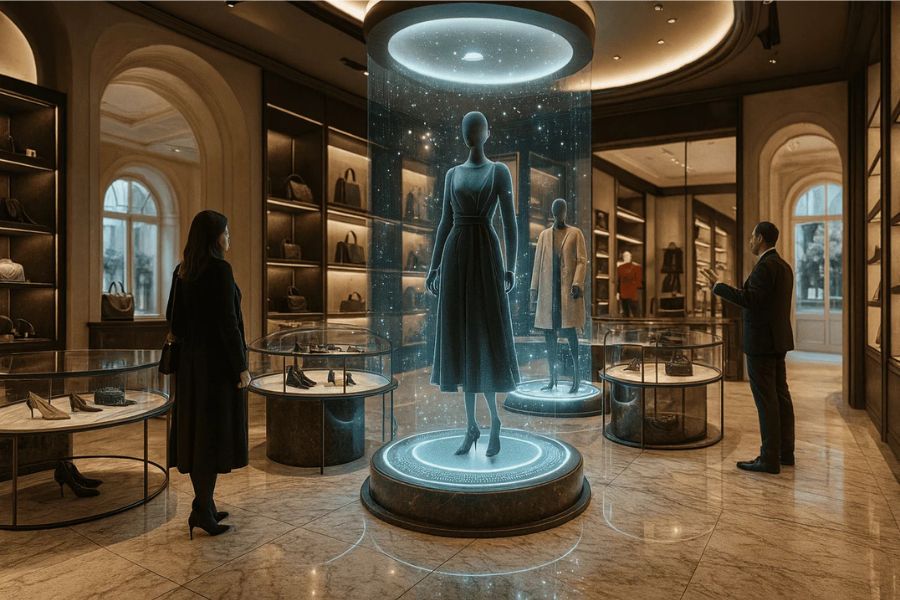
In the mass-market retail sector, technology is loud. It is defined by glowing kiosks, digital signage and high-fructose “wow” moments. However, as we move into the second quarter of 2026, the world’s leading luxury houses, Chanel, Hermès and LVMH, are moving in the opposite direction. They are embracing a strategy of “Quiet Tech”: using sophisticated AI and sensor networks to remove technology from the customer’s sight, thereby restoring the focus to human craftsmanship and personal relationships.
The De-Screening of the Boutique
For luxury clients, the presence of a tablet or a self-service screen is increasingly viewed as a “service friction” rather than a feature. In 2026, the goal is to make the technology invisible.
Instead of asking a client to “check in” on a screen, boutiques are utilizing Computer Vision and ultra-wideband RFID discreetly embedded in the architecture. When a top-tier client enters, the system recognizes their opt-in mobile “handshake.” It doesn’t trigger a pop-up; instead, it sends a haptic alert to a sales associate’s smartwatch, providing a “Client Silhouette”, a brief summary of their recent global purchases, stylistic preferences and even life milestones like an upcoming anniversary. The technology serves to empower the human associate, not replace them.
Personalization as Politeness
The “Great Reset” of luxury in 2026 has redefined AI’s role. It is no longer about aggressive upselling; it is about “Personalization as Politeness.” LVMH, in partnership with Google Cloud, has pioneered AI-powered analytics that surface a client’s “style DNA.”
This allows an advisor to curate a selection of products before the client even speaks. If the AI detects a shift in a client’s browsing patterns toward minimalist, sustainable fabrics (driven by the new Digital Product Passport data), the advisor can proactively present a bespoke collection that resonates with those evolving values. The intention is to create a feeling of being “considered” rather than “targeted.”
The Invisible Checkout and the “Background Handshake”
The most significant shift in 2026 is the disappearance of the transaction itself. High-end boutiques are moving away from the traditional “walk to the counter” moment.
Through “Invisible Checkout” systems, sensors in the private dressing room or the “Consultation Suite” automatically build a digital cart as items are selected. The final transaction happens via a background biometric or mobile handshake. This removes the “clunky” moment of swiping a card or waiting for a receipt, allowing the client to simply walk out with their purchase while the associate focuses on a warm, human farewell. This is the luxury version of “Just Walk Out”.
Resale Authentication as a Service
As the luxury resale market is projected to hit $360 billion by 2030, 2026 has seen brands like Hermès and Chanel use “Quiet Tech” to maintain control over their secondary markets.
Proprietary AI models and microscopic computer vision now allow boutiques to offer Instant Authentication. When a client brings in a vintage piece, the tech can verify the specific weave of the leather or the unique serial signature of the hardware in seconds. This allows the brand to facilitate in-house trade-ins, effectively turning the boutique into a lifelong “Asset Management” hub for the client.
Sources:

You may also like
Pay Later Moves From the Shopping Basket to the Shop Counter
Pavement Robots Move From Pilot Projects to Grocery Delivery