The NVIDIA-FIA Partnership and the Future of Physical AI
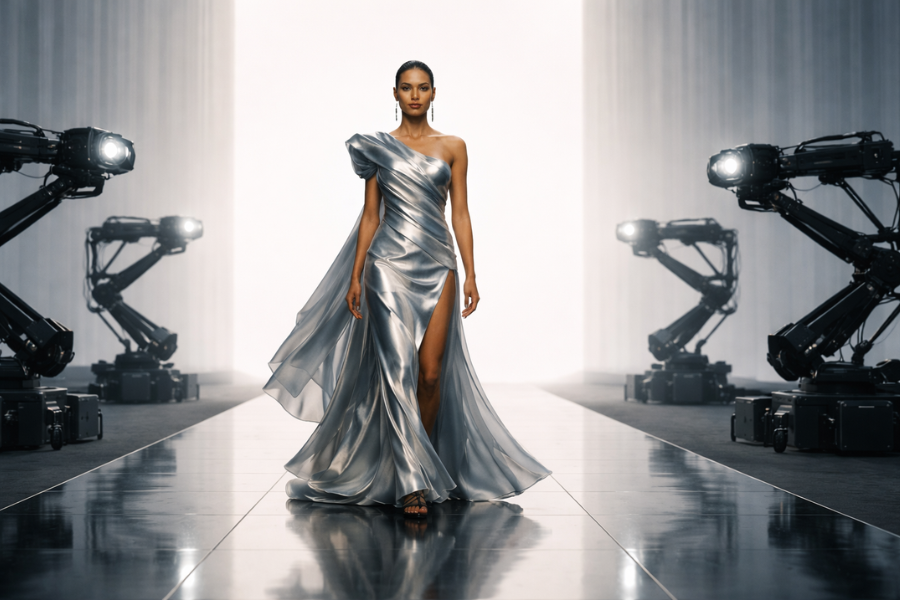
At NVIDIA GTC 2026, the fashion industry reached a “culture-tech inflection point.” Through a flagship project titled “The Machine Muses: AI in Fashion,” NVIDIA and the Fashion Innovation Agency debuted a hyper-realistic AI catwalk that moves beyond simple image generation into a physics-based, real-time digital environment.
Real-Time VFX and Physics-Based AI
Developed in collaboration with VFX and AI artist Johannes Saam (known as Atara), the AI runway project utilizes a complex pipeline that merges generative AI with traditional high-end visual effects.
- Dynamic Environments: Unlike traditional digital fashion shows, which are pre-rendered and static, the GTC 2026 showcase utilizes real-time engines. This allows lighting, backgrounds and garment textures to shift instantly in response to data or creative direction.
- WarpFusion and ControlNet Integration: The project builds upon a technical foundation where motion data is extracted from archival catwalk footage. Using ControlNet for pose control and Stable WarpFusion for temporal consistency, the system transfers generated styles onto the movement of real models, ensuring that the “digital drape” of the fabric remains consistent and realistic across every frame.
- Physics-Backed Rendering: The digital garments are not just visual overlays; they are simulated using NVIDIA’s high-performance inference stacks to mimic the actual physics of cloth, accounting for weight, friction and movement.
Operational Impact
Matthew Drinkwater, Head of the FIA, has framed this technology as a solution to the fashion industry’s long-standing waste problem. The traditional pipeline involves months of physical sampling and high inventory risk.
The NVIDIA-FIA model proposes a digital-first workflow:
- In Silico Prototyping: Designers can “spin up” multiple AI catwalks to visualize collections long before a physical sample exists.
- Market Validation: Brands can run fan and buyer sentiment tests on these hyper-realistic digital assets. By identifying the most resonant aesthetics digitally, they green-light only a fraction of designs for physical production, significantly reducing the environmental footprint of unsold goods.
Systems-Level Innovation
The partnership extends beyond the runway into systemic decision-making tools. A key highlight was ALIGN FASHION (Aligned AI Agent for Circular Decision-Making), a project supported by an NVIDIA Academic Grant.
- Sustainability Advisor: ALIGN acts as a “systems-level advisor” that works alongside a designer. As a sketch is iterated, the agent analyzes the circularity of material choices, production volumes, and end-of-life pathways to nudge the creative team toward lower-impact choices.
- Agentic Commerce: Moving from passive automation to active “agents,” GTC 2026 showcased systems that proactively sense and act. This includes CATCHES “RealFit” technology, which uses NVIDIA Omniverse to simulate fabric drape on a consumer’s “digital twin” with millimeter accuracy, addressing the retail industry’s multi-billion dollar return problem.
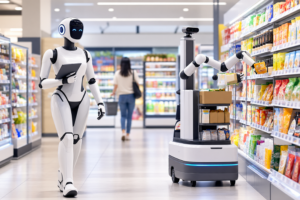
Retail’s “Physical AI” Era
The FIA’s work sits within a broader retail transformation highlighted by NVIDIA CEO Jensen Huang. From Instacart’s Caper Carts (using NVIDIA Jetson for real-time in-store personalization) to Yum! Brands using AI to alleviate employee burdens, the theme is the integration of “Physical AI” into every consumer touchpoint.
Fashion is no longer just a physical product; it is a software-defined asset that can be simulated, tested, and sold in a virtual environment before it ever becomes physical.
Sources:

You may also like

Pay Later Moves From the Shopping Basket to the Shop Counter

Pavement Robots Move From Pilot Projects to Grocery Delivery