Consumer spending looks strong but it’s fragile underneath
At first glance, the latest retail data points to a resilient consumer.
In March 2026, U.S. retail sales rose 1.7% month-on-month, marking the strongest increase in over three years. On the surface, this suggests that consumer demand remains solid despite ongoing economic pressures.
A closer look at the data, however, reveals a more uneven picture.
Growth is being driven by fuel prices, not broad demand
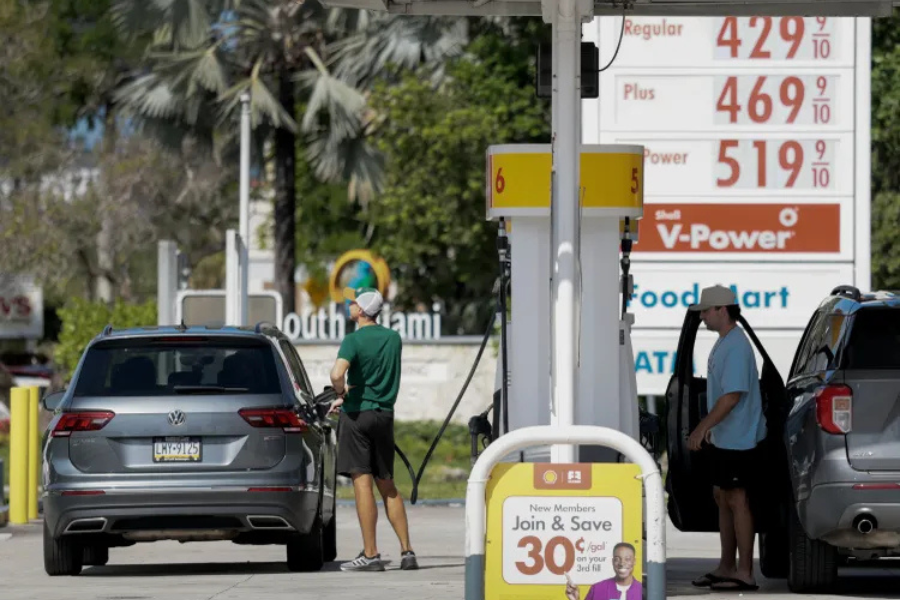
A significant share of the increase in retail sales was driven by higher gasoline prices.
Sales at gas stations rose sharply, accounting for a large portion of the overall monthly gain. When gasoline is excluded, retail sales growth is considerably more modest.
This distinction is important because retail sales figures are not adjusted for inflation. As a result, rising prices, especially in essential categories like fuel, can inflate the headline number without reflecting stronger underlying consumption.
In practical terms, consumers are spending more money, but not necessarily buying more goods.
Discretionary spending is showing signs of weakness
While total retail spending increased, performance across categories was uneven.
Growth in discretionary areas remained limited:
- Restaurant spending rose only marginally
- Clothing sales were weak or flat depending on the dataset
At the same time, some categories did record gains:
- Furniture sales increased
- Electronics and appliance sales also saw modest growth
The variation across categories suggests that spending is not broad-based. Instead, it is concentrated and uneven, with certain segments holding up better than others.
Short-term factors are supporting spending
Recent spending has also been supported by temporary factors rather than structural improvements in consumer demand.
Tax refunds provided additional liquidity to households during the period, helping sustain spending levels. In addition, some consumers have drawn on savings to maintain consumption despite rising costs.
These factors help explain the resilience in headline figures, but they do not necessarily indicate long-term strength.
Rising costs are beginning to weigh on consumers
There are clear signs that higher living costs are starting to affect consumer behaviour.
Fuel prices increased significantly during the period, contributing directly to higher retail sales values. At the same time, broader concerns around inflation have weighed on consumer sentiment, which has declined.
Higher spending on essentials such as fuel reduces the amount of income available for discretionary purchases. This dynamic is already visible in the slower growth across non-essential categories.
Strong headline, weaker underlying momentum
Taken together, the data presents two parallel realities.
On one hand, retail spending remains strong at the headline level. On the other, the underlying drivers of that growth are less robust.
Core retail sales, which exclude more volatile categories and are often used as a proxy for underlying consumption, grew at a slower pace than the overall figure. This points to a more moderate underlying demand.
What the data shows right now
Based on the latest available figures:
- Consumer spending is holding up in aggregate
- A meaningful portion of growth is driven by higher prices in essential categories
- Discretionary spending is growing more slowly and unevenly
- Temporary factors have helped sustain consumption
- Rising costs and weaker sentiment are emerging as constraints
A fragile balance
The current retail environment is not defined by a collapse in demand, but by a shift in its composition.
Consumers are still spending, but a larger share of that spending is being directed toward essentials. At the same time, underlying demand in discretionary categories is showing early signs of strain.
This creates a situation where headline numbers remain strong, even as the foundations beneath them become more fragile.
Sources:

You may also like