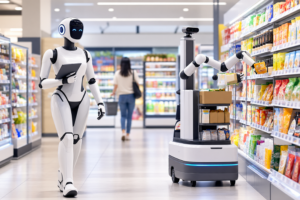
The Shelf is Becoming Software
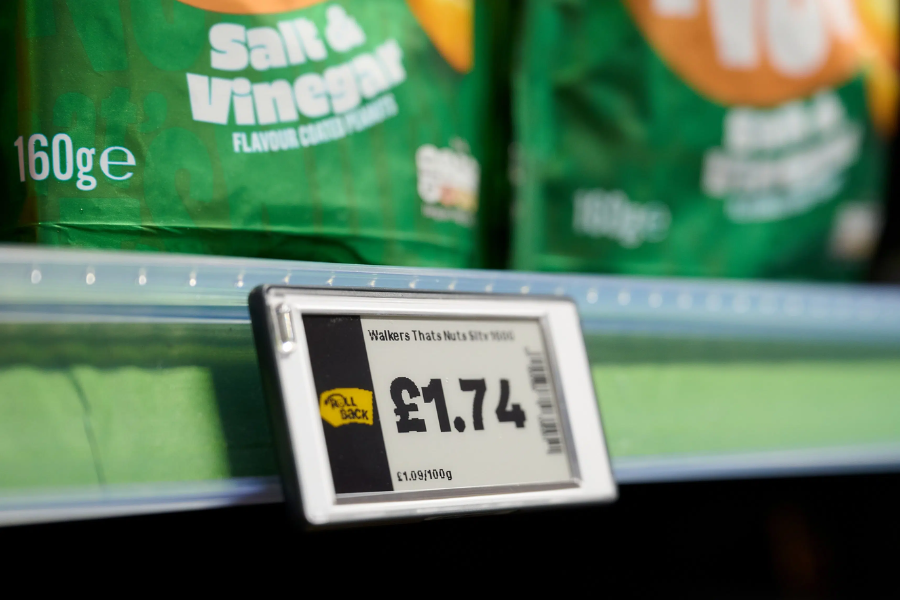
Retail shelves are no longer static fixtures designed only to display products and prices. Across grocery and mass retail, shelves are increasingly being connected to digital systems capable of updating prices instantly, managing promotions in real time and integrating directly with inventory and fulfilment operations.
This transformation is being driven by large retailers deploying electronic shelf labels, AI-powered inventory systems and connected store infrastructure at scale. What was once a manual process based on printed paper labels is evolving into a software-controlled retail environment.
The result is a structural shift in how physical stores operate. Shelves are becoming part of a live digital network rather than passive store hardware.
Large Retailers Are Digitising Shelf Infrastructure
One of the clearest examples of this shift is the large-scale rollout of electronic shelf labels across major supermarket chains.
In October 2025, Morrisons announced plans to deploy electronic shelf labels across all 497 supermarkets, becoming the first major UK supermarket chain to implement the technology across its full estate. According to Morrisons, more than 10.8 million digital shelf labels will replace traditional paper pricing across stores.
The retailer stated that the system would automate price updates, improve pricing accuracy and integrate with digital shelf-edge cameras to identify product gaps and support replenishment operations.
Similarly, Walmart has been expanding digital shelf labels across stores in the United States. As of March 2026, roughly 2,300 Walmart U.S. locations were already using the technology, with plans for it to be deployed chain-wide within the next year. Walmart’s corporate blog noted that price updates which once took associates days to complete can now be done in minutes, freeing up time for customer service and shelf replenishment.
At Asda, electronic shelf labels are also being introduced across Express convenience stores following store trials in Manchester. The rollout covers 250 of Asda’s largest and busiest Express locations, with around 2,800 separate labels per store, eliminating the need for manual price tag replacement.
The scale of these deployments shows that connected shelf infrastructure is no longer experimental. It is becoming operationally mainstream.
Pricing Is Becoming Dynamic and Instantaneous
The most immediate impact of digital shelf systems is the ability to update prices instantly across stores.
Traditional paper-based pricing requires staff to print, replace and verify labels manually. Electronic shelf labels allow retailers to synchronise prices centrally and push updates directly to shelves in real time.
According to Morrisons, the technology will instantly display More Card promotions and pricing updates directly at shelf level.
This operational capability is significant because it transforms the shelf from a static display into a responsive digital interface connected directly to retailer pricing systems.
However, the shift has also raised wider industry discussions around dynamic pricing. In April 2026, the Bank of England warned that electronic shelf labels “could enable dynamic pricing in the future,” noting that such technology is “already widespread in Europe.” Several UK supermarkets including Morrisons, Co-op and Asda are rolling out the technology, and while the British Retail Consortium has stated that supermarkets “have no plans” to introduce dynamic or surge pricing, the underlying infrastructure increasingly makes real-time pricing technically possible.
Walmart has sought to address similar concerns in the U.S., stating in its corporate blog that “prices are the same for all customers in any given store and are consistent regardless of demand, time of day or who is shopping.” A working paper from UC San Diego also found no evidence that electronic shelf labels caused price spikes, even during periods of elevated inflation.
This introduces a new dimension to retail operations where prices are no longer constrained by physical replacement cycles.
Shelves Are Becoming Operational Intelligence Systems
Connected shelf systems are also changing how retailers manage inventory and store operations.
According to Morrisons, its digital shelf infrastructure will integrate with shelf-edge cameras capable of identifying stock gaps and improving replenishment efficiency. The retailer also stated that the system would support e-commerce picking operations by making online order fulfilment more accurate.
Walmart’s digital shelf labels include “Stock to Light” functionality, where associates use a mobile device to activate LED lights on shelf labels to quickly identify where items need to be restocked, reducing guesswork and making stocking more efficient. A “Pick to Light” feature similarly guides associates to items for online order fulfilment, improving both speed and accuracy.
This reflects a broader trend where shelves are increasingly connected to operational data systems rather than functioning purely as merchandising space.
Academic research published on arXiv highlights how computer vision technologies are increasingly being developed for shelf auditing and retail product recognition applications. The RP2K dataset, containing more than 500,000 images of retail products on shelves across 2,000 different product categories, was designed to advance research in “automatic shelf auditing and image-based product information retrieval.”
As a result, the shelf is evolving into a continuously monitored operational layer capable of interacting with inventory, fulfilment and merchandising systems simultaneously.
Retail Media Is Moving Onto the Shelf
Another important development is the growing convergence between shelf infrastructure and retail media.
Retail media has historically focused on websites, apps and sponsored search placements. Increasingly, retailers are exploring ways to extend media networks into physical stores using connected shelf systems and digital displays.
In May 2026, Stater Bros. Markets launched an in-store retail media initiative across its 165 Southern California supermarkets, beginning with programmatic in-store audio and planning to expand to digital screens later in the year. The retailer, which draws more than 2.5 million weekly store visits, described the initiative as a way to “thoughtfully introduce in-store media in a way that complements the shopping experience.”
This shift matters because connected shelves create the technical foundation for real-time advertising and promotional messaging directly at the point of purchase.
The shelf itself increasingly functions as programmable retail media inventory.
Operational Efficiency Is Driving Adoption
Although connected shelf systems are often presented as customer-facing innovations, operational efficiency remains the primary driver behind adoption.
Large retailers manage tens of thousands of SKUs across hundreds of stores, making manual pricing changes labour-intensive and prone to error.
According to Morrisons, digital labels will “eliminate traditional paper labels throughout the store” and “automate a repetitive manual task to free up colleagues to concentrate on customer service.”
Walmart’s corporate blog stated that with more than 120,000 items in a store and thousands of weekly price updates, “what once took multiple associates days to complete can now be done in minutes, freeing up time to be spent with customers.”
This becomes increasingly important as retailers face labour cost pressures, omnichannel fulfilment complexity, rapid promotional cycles and quick commerce expectations. Connected shelves provide a way to manage these operational demands through software automation rather than manual store processes.
Consumer Concerns Are Emerging Alongside Adoption
As shelves become more software-driven, consumer and employee concerns are also becoming more visible.
The United Food and Commercial Workers International Union has launched a national campaign against the technology, describing electronic shelf labels as the “missing piece of surveillance pricing” which allows companies to “change prices in the blink of an eye.” Model legislation requiring paper shelf pricing in stores larger than 10,000 square feet has been introduced in several U.S. states.
In the UK, public discussions around dynamic pricing have intensified following the Bank of England’s warning that electronic shelf labels could pave the way for demand-based pricing in supermarkets.
While retailers continue to frame digital shelf systems primarily as efficiency tools, the growing ability to alter prices and promotions instantly is changing how consumers think about pricing transparency inside physical stores.
The Physical Store Is Becoming Software-Defined
The broader significance of connected shelves extends beyond pricing technology.
Retail stores are increasingly becoming software-defined environments where shelves, fulfilment systems, pricing engines and operational analytics function as interconnected digital infrastructure.
This fundamentally changes the role of the shelf. Instead of serving as a passive product display, it becomes an active interface connected to live operational systems.
Large retailers are no longer treating shelves as static infrastructure. They are turning them into connected operational systems capable of supporting real-time pricing, AI-driven inventory management, fulfilment coordination and retail media activation.
The shelf is no longer simply where products sit. It is becoming a software layer embedded within the store itself.
Sources

You may also like
Pay Later Moves From the Shopping Basket to the Shop Counter
Pavement Robots Move From Pilot Projects to Grocery Delivery