How Retail is Shifting from Products to Access
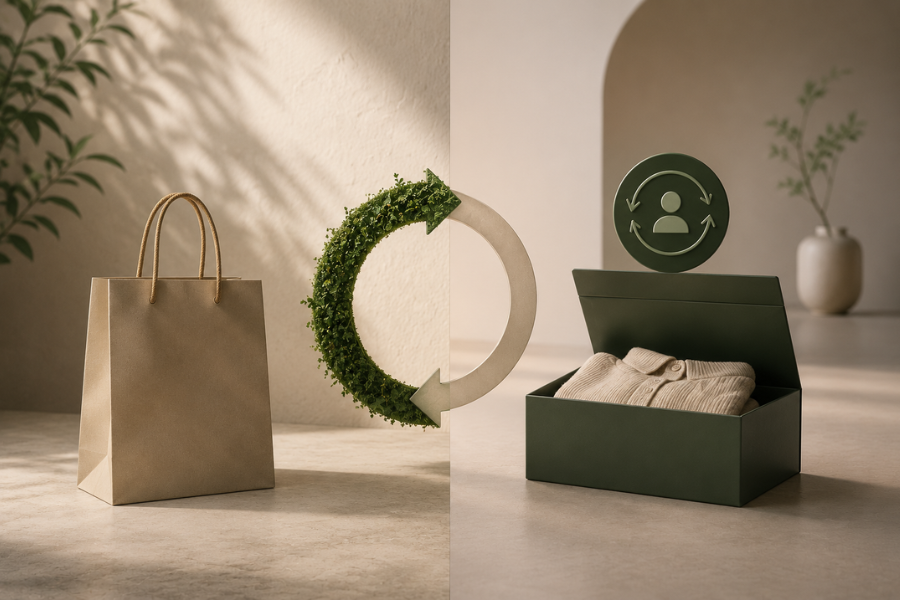
Retail is undergoing a structural shift, not driven by hype, but by measurable changes in consumer behaviour and business models. Increasingly, retailers are not just selling products; they are building models around access, subscriptions and product lifecycle extension.
This is not a theoretical transition. It is already visible across recommerce, subscription services and changing store formats, supported by industry reports and real-world implementations.
From Ownership to Access
One of the clearest signals of change is the growing role of subscription-based models in retail. Industry analysis identifies subscription services as a key retail trend shaping 2026, alongside AI and sustainability.
This reflects a broader evolution in how value is delivered. Instead of one-time transactions, retailers are increasingly building ongoing service relationships, where customers pay for continued access rather than ownership.
At the same time, physical retail itself is being redefined. Stores are no longer just points of sale, they are becoming service and fulfilment hubs, where customers interact with products without necessarily owning them.
This combination of subscription models and service-based retail marks a clear departure from traditional ownership-driven commerce.
Recommerce and Product Lifecycles Are Expanding
Another major shift comes from the growth of recommerce, the buying and selling of pre-owned goods.
Academic and industry research shows that digitally enabled recommerce platforms are expanding, allowing brands and marketplaces to extend product lifecycles and create new revenue streams from used goods.
This is significant because it changes the role of ownership. Products are no longer endpoints in a linear journey (buy → use → discard). Instead, they move through multiple users and transactions, reinforcing a model where access is temporary and fluid.
At the same time, sustainability pressures are accelerating this trend. Circular retail models, including resale and reuse, are increasingly positioned as both environmental and commercial strategies, rather than niche initiatives.
Why Now: Three Converging Forces
1. Subscription and Service Models Are Scaling
Retail reports consistently identify subscription-based offerings as a major growth area.
These models shift revenue from one-time purchases to recurring streams, fundamentally changing how retailers engage with customers. Instead of maximising basket size, the focus moves to retention, frequency and lifetime value.
2. Consumer Behaviour Is Becoming More Flexible
Consumer shopping journeys are becoming less linear and more fragmented. Shoppers now interact with multiple channels, platforms, and touchpoints before completing a purchase.
This behaviour reflects a broader shift toward flexibility and convenience, where access to products across channels matters more than permanent ownership.
Additionally, the rise of omnichannel services, such as click-and-collect and hybrid fulfilment, shows that consumers value immediacy and accessibility over possession.
3. Sustainability Is Driving Circular Models
Sustainability is no longer a peripheral concern, it is a central driver of retail strategy. Circular models such as resale, reuse and product lifecycle extension are increasingly integrated into mainstream retail operations.
Recommerce, in particular, aligns environmental goals with business incentives by extending the usable life of products while generating additional revenue streams.
Real-World Signals Across Retail
The shift toward access-based models is already visible across multiple parts of the retail ecosystem.
Subscription-based services are expanding across categories, from fashion to consumables, as retailers seek predictable, recurring revenue.
At the same time, recommerce platforms are growing as structured marketplaces, enabling both consumers and brands to participate in resale ecosystems.
Physical stores are also evolving. Instead of focusing solely on transactions, they are increasingly designed as experience, service and fulfilment centres, supporting hybrid consumption models where ownership is not always the end goal.
These developments are not isolated, they are interconnected signals of a broader shift toward access.
What This Means for Retailers
This transition has clear operational and strategic implications.
First, revenue models are changing. Subscription and service-based approaches require retailers to focus on retention and engagement, rather than just acquisition.
Second, inventory and supply chains must adapt to multi-use product lifecycles, especially in recommerce and rental models.
Third, customer relationships become continuous rather than transactional. Retailers must manage ongoing interactions, not just point-of-sale moments.
Finally, differentiation shifts away from product ownership toward service quality, convenience and accessibility.
Competing on Access, Not Ownership
The retail industry is not abandoning products, but it is redefining what it means to deliver value through them.
Subscription models, recommerce platforms, and service-oriented retail formats all point in the same direction: ownership is no longer the only, or even the primary, way consumers engage with products.
Retailers are increasingly competing on how easily, efficiently and sustainably they can provide access.
In that sense, the competitive question is changing: It is no longer just about what customers buy but about how, when and how often they can access it.
Sources

You may also like
Pay Later Moves From the Shopping Basket to the Shop Counter
Pavement Robots Move From Pilot Projects to Grocery Delivery