The Second Wave of Cashierless Commerce
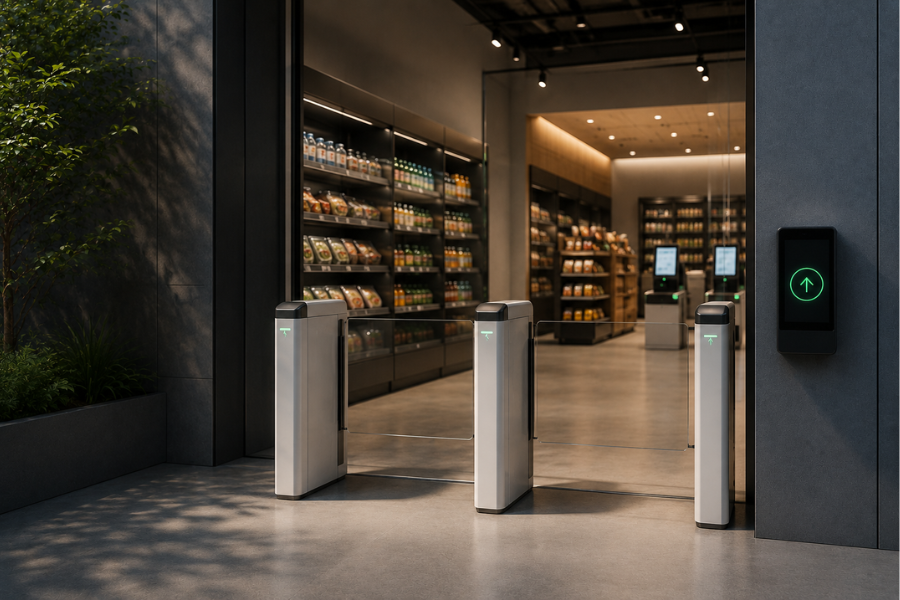
Cashierless retail is entering a new stage of development. The first wave was defined largely by highly publicised experiments such as Amazon Go, where computer vision and sensor-heavy stores demonstrated that checkout-free shopping was technically possible. While these early concepts reshaped expectations around frictionless commerce, they also exposed the operational complexity and cost of scaling fully autonomous stores.
The second wave looks significantly different. Instead of focusing on futuristic flagship concepts, retailers are now integrating autonomous technologies into broader operational strategies centred on efficiency, scalability and convenience. The emphasis has shifted from showcasing innovation to embedding automation into everyday retail infrastructure.
This transition is evident across grocery, convenience, quick-service restaurants and fulfilment operations, where major retailers are increasingly deploying AI, computer vision and automation technologies to reduce friction and improve operational speed.
Autonomous Retail Is Expanding Beyond Checkout
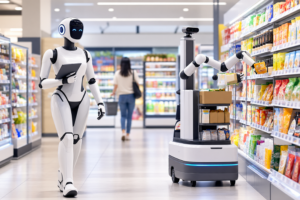
The most important shift in cashierless commerce is that automation is no longer limited to payment removal. Increasingly, retailers are using AI and automation to manage inventory, fulfilment, merchandising and in-store operations alongside checkout experiences.
Walmart, for instance, has deployed real‑time AI systems across its global supply chain and automated more than half of its e‑commerce fulfilment volume. The company has also begun large‑scale rollouts of AI‑powered connected stores, using platforms that combine electronic shelf labels, sensors and analytics to automate inventory and pricing across hundreds of physical locations.
Similarly, Kroger is piloting automated micro‑fulfilment inside a US West Coast store, aiming to speed up online grocery order processing and compete with faster rivals.
This broader integration signals that autonomous retail is evolving into an operational model rather than simply a checkout innovation.
Retailers Are Prioritising Smaller and More Flexible Formats
One reason the second wave appears more scalable is that retailers are moving away from large, sensor-intensive store environments toward more targeted deployments.
Autonomous and semi-autonomous systems are increasingly appearing in:
- convenience formats
- airports and transit hubs
- stadiums and entertainment venues
- campus retail environments
- micro-fulfilment locations
These environments prioritise speed and convenience over extended browsing experiences, making them more suitable for automated retail systems.
Checkout‑free stores have now opened in multiple sports stadiums, university campuses, hospitals and other high‑traffic venues across the globe, with new locations launching as recently as March 2026.
This reflects a broader industry shift toward autonomous retail models designed around specific operational use cases rather than fully replacing traditional supermarkets.
Computer Vision Is Becoming Core Retail Infrastructure
Computer vision technology has become one of the foundational layers of autonomous retail.
Retailers are increasingly using vision systems not only for checkout-free experiences, but also for:
- shelf monitoring
- inventory tracking
- loss prevention
- replenishment visibility
- operational analytics
Major grocers are deploying platforms that integrate shelf‑edge sensors, computer vision and AI to automate price updates, detect out‑of‑stocks and enable real‑time store‑level data visibility. Tesco is also trialling electronic shelf labels that allow instant, centralised price changes and improve on‑shelf accuracy.
At the same time, retailers deploying electronic shelf labels and AI‑driven pricing infrastructure are creating environments where store conditions can be updated dynamically in real time. Morrisons, for example, has now installed digital shelf‑edge labels in 50 stores, demonstrating how large‑scale rollouts of these platforms are now underway.
This demonstrates how autonomous retail increasingly depends on continuous store‑level data visibility rather than isolated checkout systems.
Quick Commerce and Autonomous Operations Are Converging
Another major factor accelerating autonomous retail is the growth of quick commerce and on‑demand fulfilment models.
Retailers and delivery platforms are under pressure to reduce fulfilment times while maintaining operational efficiency. This has increased investment in:
- automated picking systems
- AI-driven replenishment
- micro-fulfilment infrastructure
- robotics-enabled logistics
Micro‑fulfilment centres, small, highly automated warehouses placed close to consumer demand, are now seen as a key enabler of fast delivery, with automation helping to cut fulfilment costs by up to 75%. Kroger’s recent micro‑fulfilment pilot is a direct response to this trend, as the retailer seeks to offer one‑ to three‑hour online grocery delivery.
The convergence between autonomous retail and quick commerce is significant because both models prioritise operational speed, low friction and high inventory accuracy. As a result, many retailers are increasingly treating automation as essential infrastructure for modern retail operations rather than experimental technology.
The Economic Logic Has Changed
The second wave of cashierless commerce is also being driven by structural economic pressures rather than novelty.
Retailers globally continue to face:
- rising labour costs
- operational efficiency pressures
- increasing fulfilment complexity
- demand for extended operating hours
Automation is increasingly viewed as a way to address these pressures while maintaining service levels.
The 2026 Retail Technology Show reflected this shift, with the event’s organiser noting that innovation now sits “at the heart of RTS” because “the speed of transformation is moving at unprecedented pace” and retailers need practical, scaled‑up AI solutions to remain competitive. McKinsey’s 2026 European grocery report also highlights that grocers are using AI and automation to defend margins in a market where 60% of consumers are switching to private‑label products and cheaper retailers.
This marks a clear departure from the earlier phase of cashierless retail, where much of the focus centred on consumer novelty and media attention.
Amazon No Longer Defines the Category
Although Amazon played a major role in popularising cashierless commerce, the broader industry is now developing more diverse approaches to autonomous retail.
Retailers are increasingly integrating selective automation into existing ecosystems instead of building entirely autonomous stores from scratch. In many cases, the goal is not full automation, but operational optimisation.
This distinction matters because it makes deployment more commercially practical. Instead of replacing entire retail environments, retailers can automate individual processes such as checkout, fulfilment, inventory monitoring or merchandising.
The result is a more modular and scalable version of autonomous retail.
Human Roles Are Changing Rather Than Disappearing
Despite the rise of automation, the second wave of cashierless commerce is not eliminating human involvement entirely.
Instead, retailers are redistributing labour toward:
- replenishment
- fulfilment
- customer assistance
- operational oversight
- exception management
This aligns with broader retail automation trends, where repetitive and process-driven tasks are increasingly handled by AI and robotics systems while human roles shift toward supervision and service.
Walmart’s COO for Mexico, for example, stated that the connected store technology is intended to “reduce manual tasks and allow employees to dedicate more time to assisting customers.”
As autonomous technologies expand, retail stores are becoming more software-driven environments where operational intelligence plays a larger role in everyday execution.
Cashierless commerce is no longer defined by experimental flagship stores or by a single company.
The second wave of autonomous retail is more operational, more modular and more commercially focused. Automation is increasingly being embedded into fulfilment, merchandising, inventory management and store infrastructure rather than existing solely as a checkout feature.
Large retailers are now treating autonomous systems as part of broader retail transformation strategies designed to improve efficiency, responsiveness and scalability.
The defining shift is no longer simply about removing the cashier. It is about making retail operations themselves increasingly autonomous.
Sources

You may also like

Pay Later Moves From the Shopping Basket to the Shop Counter
Pavement Robots Move From Pilot Projects to Grocery Delivery