How Video Security Became Operational Intelligence
For years, the security camera hanging from a retail ceiling served a single, well-defined purpose. It was a witness. Its job was to record, and when an incident occurred, someone would pull the footage after the fact, review it and file it away. That camera was a passive, reactive tool in a world that was increasingly active and real-time.
In 2026, that same camera has been quietly promoted. It is no longer just a witness. It has become a sensor, a decision-making tool and a source of continuous, real-time intelligence that is reshaping every corner of the physical store.
The Witness That Learned to See
The evolution of the retail camera is a story of untapped potential. For decades, retailers have operated with a massive, underutilised asset: their existing CCTV infrastructure, which captured vast amounts of data but did nothing with it in the moment. That has changed with the addition of artificial intelligence, which has transformed these passive recording tools into dynamic sources of operational intelligence. This is more than a software upgrade; it is a fundamental rethinking of what a store can be. AI-powered video analytics, using computer vision models to read live feeds, are now turning every frame of video into a stream of actionable data.
This shift is so significant that it was the dominant theme at the 2026 National Retail Federation Big Show. Industry observers noted that “Vision AI is no longer a fringe capability or a pilot-only experiment in retail,” marking its entry into a phase of broad, real-world adoption. But the story here is not the technology itself. It is what the technology enables: a move from asking “what happened?” after the fact to answering “what’s happening right now, and who needs to know?”.
The Rise of the Multi-Tasking Sensor
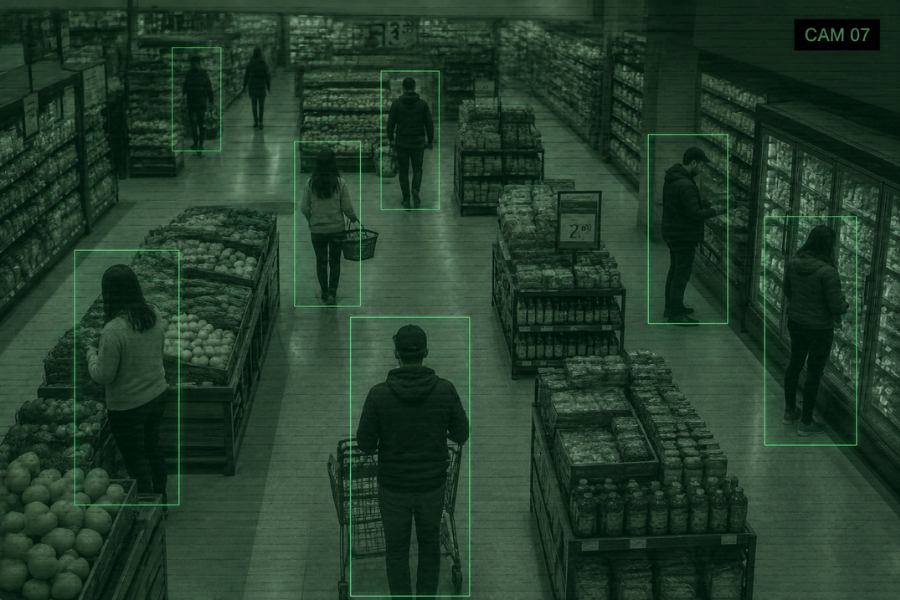
The most powerful illustration of this transformation is the humble ceiling-mounted camera. A single unit positioned over a self-checkout lane can now perform at least three distinct and valuable jobs simultaneously. It can flag a bag of un-scanned items walking out the door, solving a classic loss prevention problem. It can notice that the lane is backing up, alerting a manager before a frustrated customer abandons their cart. And it can detect that an endcap display has been empty since the morning restock, preventing a missed sale. This is the same camera feed, generating three different operational outcomes, all in real time.
This multi-tasking capability is what transforms video from a cost centre into a profit engine. The technology works by feeding video into vision models that recognize objects, people, and events. A decision layer then turns that recognition into a useful action, such as a visual alert on a dashboard or a notification ping on a store associate’s handheld device. This relentless, automated monitoring frees human staff from the impossible task of watching dozens of screens, allowing them to focus on what matters: customer engagement and service.
A New Era of Operational Efficiency
While the initial business case for AI vision was built on loss prevention, the technology’s true value lies far beyond catching shoplifters. An empty shelf is a sale you will never see in your data; the customer simply leaves. AI vision provides the tools to prevent this. Computer vision systems can continuously scan shelves, detecting out-of-stock situations, identifying misplaced products, and even tracking inventory movement across the store in near real-time. This visibility allows retailers to reduce lost sales and improve replenishment accuracy, a critical capability in high-SKU environments like grocery stores. For example, a single camera can help automate shelf audits that might otherwise require a human to walk every aisle, a task that can now be completed with greater accuracy and in a fraction of the time.
Similarly, the technology is revolutionising customer flow management. By analysing foot traffic and activity density, AI can help retailers align staffing levels with real demand, reducing idle time during slow periods and ensuring adequate coverage during peak hours. Real-time queue detection can trigger automated alerts to open new registers, reducing wait times and improving customer satisfaction without manual intervention. In a high-stakes retail environment, these micro-optimisations translate directly into significant cost savings and a better customer experience.
Real-World Impact
These are not theoretical concepts. Across the globe, major retailers are deploying AI-powered camera systems to solve real-world problems.
One notable example comes from Iceland Foods, a leading UK grocery retailer. The company is actively deploying an active intelligence platform across its store network that uses a proprietary AI technology to turn traditional surveillance systems into a source of real-time, operational intelligence. The system analyses live video feeds to build a contextual picture of store operations, surfacing meaningful insights about shopper flow, staff efficiency, and potential security incidents. This moves the retailer from a reactive to a proactive stance, allowing it to optimise store layouts, manage queues, and prevent theft before it happens.
In another powerful example from India, Airtel, one of the country’s largest telecom retail networks, faced challenges in managing its vast store footprint. With hundreds of locations serving as high-touch customer hubs, the company lacked real-time visibility into operations. To solve this, Airtel deployed an AI-enabled video analytics solution across its stores. The system converts live camera feeds into operational intelligence, enabling centralised, real-time monitoring of customer footfall, queue lengths, staff idle time, and service wait times. The impact has been transformative: improved workforce productivity, optimised staffing based on real demand, and a strengthened ability to identify sales opportunities through enhanced customer engagement.
Even the largest retailers are on board. Supermarket chains like Kroger and Walmart are leaning into edge-based inventory intelligence, using camera systems to monitor shelf conditions and guide associates to replenish stockouts in real-time. The message is clear: from grocery stores to telecom outlets, AI-driven cameras are becoming the new eyes and ears of retail operations.
Proactive Security and Data-Driven Decisions
The application of AI to video surveillance is shifting security from a reactive to a preventative model. By continuously monitoring for behavioural anomalies, AI systems can detect potential incidents before they escalate. For instance, the technology can flag loitering in blind spots, frequent checking of security cameras, or attempts to conceal merchandise inside clothing or bags. This allows security teams to intervene in real-time, de-escalating a situation and preventing a loss. A representative from a leading provider noted that as much as **80% of highly stolen goods are concealed before reaching the checkout, highlighting the critical need for visibility beyond the front end. AI-powered theft detection is filling this gap.
Furthermore, the latest systems are moving toward a “zero-shot” model, allowing retailers to search for complex behaviours using simple, natural language. A manager can type a phrase like “shoplifting” or “suspicious behaviour” into a dashboard, and the AI will immediately begin scanning live feeds for patterns matching that description, without the need for lengthy model training. This evolution is turning the camera network into a powerful, queryable database of operational knowledge.
Of course, with this new power comes a significant responsibility. As retailers deploy more intelligent cameras, concerns about privacy and customer trust are paramount. The industry is responding by embedding “privacy-by-design” principles into its deployments, such as anonymising visual data at the edge and avoiding facial recognition for the purposes of identifying individual shoppers. A successful implementation of AI vision is not just about technical capability; it is about maintaining a delicate balance between efficiency and customer privacy.
Hardware vs. Software
As the technology matures, a strategic divide is emerging among vendors. One camp is pushing powerful, proprietary camera hardware, offering tightly integrated end-to-end systems. The other is taking a hardware-agnostic approach, focusing on sophisticated software that can leverage a retailer’s existing camera infrastructure. The hardware-agnostic model is gaining significant traction for a simple reason: most retailers already have an extensive camera deployment and are under immense pressure to limit capital expenditures. Software-first approaches enable faster pilots, lower upfront costs, and reduced operational disruption, making the decision to adopt AI vision a much easier one for budget-conscious operators.
The conclusion is inescapable. The second life of the camera is not a distant future; it is the present reality of retail. The camera is no longer a silent witness. It is an active, intelligent, and indispensable member of the store team. It prevents theft, manages queues, tracks inventory and measures performance. It frees human associates from drudgery and empowers them with real-time data. The retailer’s ability to act on what their cameras see will define the next generation of competitive advantage in the physical store.
Sources:

You may also like

Pay Later Moves From the Shopping Basket to the Shop Counter
Pavement Robots Move From Pilot Projects to Grocery Delivery