From Heavy Lifting to Skill Based Roles in Automated Warehouses
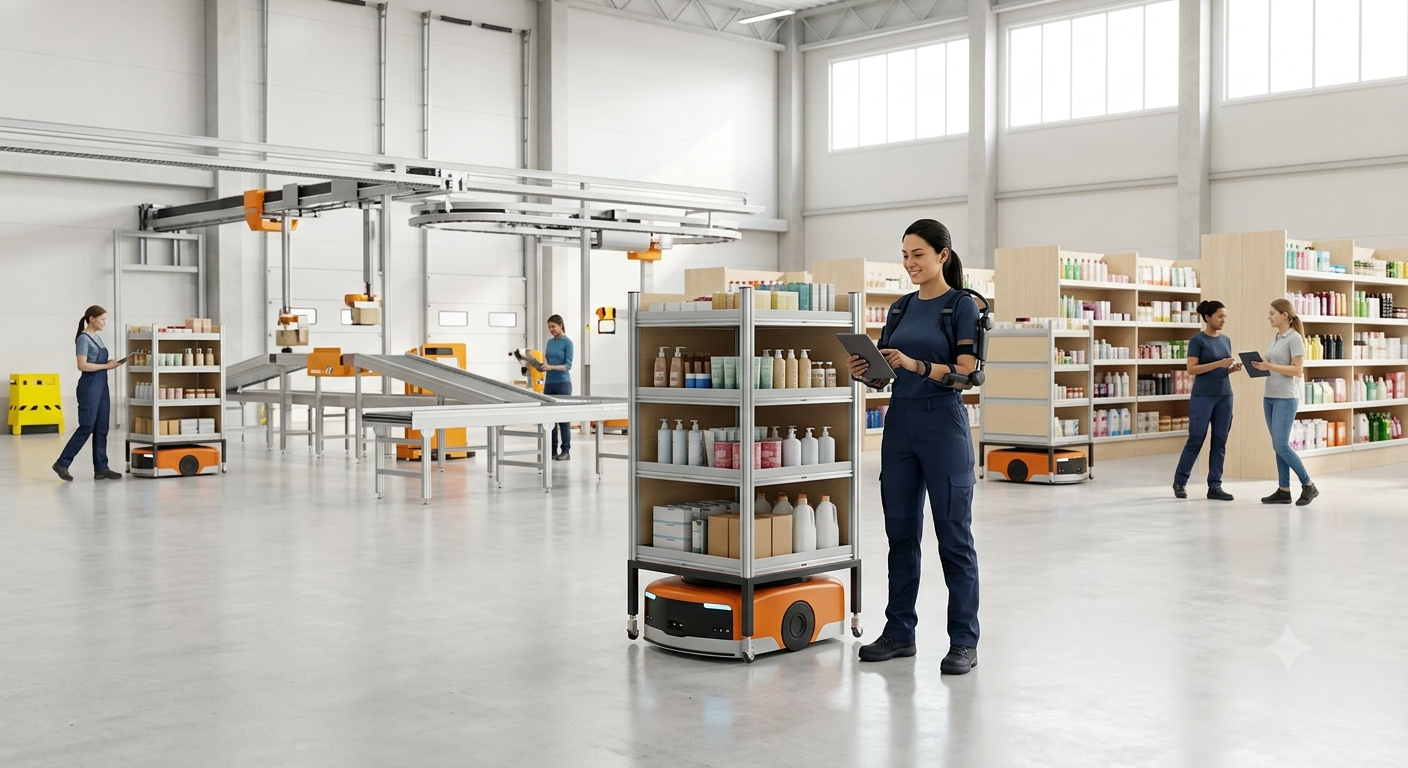
For decades, warehouses and distribution centres have been perceived as physically demanding, male-dominated environments. The work involved heavy lifting, long hours on concrete floors and roles that seemed to favour physical strength over technical skill. In 2026, that picture is changing. Across multiple markets and industries, automation is transforming warehouse operations, not only by improving efficiency and safety but also by making these workplaces more accessible to women.
A Concrete Result
One of the most striking examples of automation’s impact on workforce inclusion emerged in August 2026. During a visit to an automated warehouse in China, the group chief executive of a major health and beauty retailer observed the technology firsthand and noted a significant outcome: the female workforce ratio in the warehouse had increased to 60%.
The executive described how automation had transformed operations: “less heavy lifting, smarter workflows, and higher efficiency and accuracy”. The technology was not only about productivity but about “creating a better, more inclusive workplace while strengthening our ability to serve 3,000+ stores and millions of customers seamlessly across online and offline”.
This example is not an isolated case. It reflects a broader structural shift in how warehouses are designed and operated and who they employ.
Why Traditional Warehousing Excluded Women
Historically, logistics and warehousing have been perceived as physically intensive fields. Warehouses, freight yards, trucking hubs and delivery operations were associated with manual labour and long, unpredictable working hours, which limited women’s participation for decades.
Traditional warehouse roles have long been physically demanding, repetitive and often unappealing to a diverse workforce, especially women, who may seek less strenuous and more flexible jobs that better align with their family responsibilities.
The exclusionary effect of this model is stark. In India, for example, while the logistics sector has grown into a $354-billion industry, women still represent only 1 to 5 per cent of the workforce, particularly in operational roles such as warehousing, sorting centres and last-mile delivery networks. In some markets, women’s labour force participation has remained stagnant at around 18 per cent for the past five years, despite strong growth across industries.
How Automation Creates Opportunities
The introduction of automation, robotics, warehouse management systems and digital logistics platforms is reshaping operational processes and reducing dependence on physical labour. Rather than replacing people, automation redefines roles, transforming “warehouse labourers” into robotic system operators or problem-solving assistants.
Industry leaders have observed this shift directly. One supply chain executive noted: “With the deployment of robotics, Automated Guided Vehicles and exoskeletons, fulfilment centre roles are now based on skill and precision rather than physical strength. Women excel in these environments, bringing organisation, focus and technical capability”.
Another logistics executive observed: “Today, the focus is increasingly on systems, accuracy and consistency rather than physical strength alone”.
The results are measurable. One logistics company reported that women now constitute approximately 17 per cent of its under-roof workforce, compared to 2 to 3 per cent five years ago, with 5,468 women employed across its operations network.
Broader Industry Trends
The connection between automation and workforce inclusion is not limited to a single company or region. Globally, the robotics and automation industry has seen women’s participation grow from 18 per cent in 2015 to 28 per cent in 2023 in the robotics workforce. Automation has also contributed to a 70 per cent reduction in workplace injuries in high-risk sectors, making warehouse work safer and more accessible to a broader range of workers.
The International Federation of Robotics has actively promoted women in robotics, giving them more visibility and acknowledgement to inspire young women to pursue careers in STEM and help companies achieve gender equality while overcoming staff shortages. In 2026, the federation honoured eleven women shaping the future of robotics.
Industry observers have noted that diverse teams drive innovation, operational excellence and better decision-making. Companies increasingly recognise that diversity improves workforce stability, operational efficiency and organisational resilience.
The Case for Inclusion
The business case for inclusion is also becoming clearer. Industry reports suggest that hiring women representatives can deliver a return on investment as high as 15 to 20 per cent. The adoption of technology and the creation of safer working environments have opened up greater opportunities for women in logistics.
However, as one industry leader noted, “women’s participation does not expand automatically when sectors grow, but when systems are intentionally designed to include them”. Automation alone is not sufficient; it must be accompanied by investment in inclusive hiring, safer workplaces and structured career pathways.
Looking Ahead
The transformation of warehouses through automation is creating a new paradigm for workforce inclusion. By reducing the physical demands of warehouse work and shifting the focus to skill, precision and system operation, automation is making these roles accessible to a broader and more diverse workforce.
The 60 per cent female workforce ratio achieved in one automated warehouse in China, alongside similar progress in other markets, suggests that automation can be a powerful tool for inclusion. As one logistics executive observed: “The future of logistics will not only be faster and more technology-driven, it will also be more inclusive, with women playing a central role in shaping its growth”.
Sources:

You may also like
Why Every Online Order May Soon Get a Made to Measure Box

AI Agents Step Into the Store Manager’s Office