How Zero-Shot AI Detection Is Transforming Retail Security
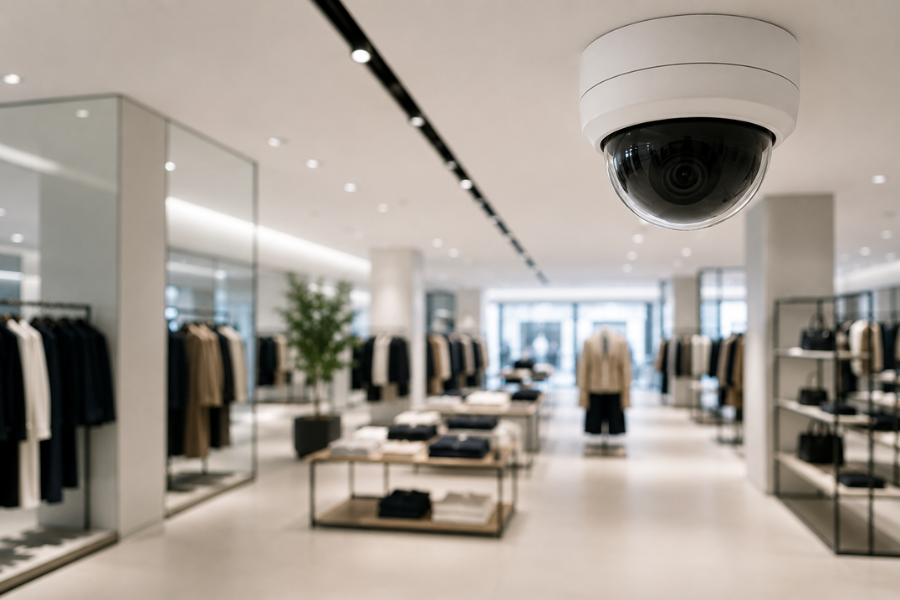
When AI detection models can be deployed with the simplicity of a text prompt, retail security shifts from passive recording to proactive intelligence. This is the quiet revolution of zero-shot detection, and it is redefining what it means to watch a store floor. For decades, training a machine to spot a shoplifter meant feeding it thousands of labelled examples, weeks of computing time and a budget that only large chains could afford. In early June 2026, a small Arizona-based technology company took that entire process and compressed it into a single sentence, typed on a dashboard.
The new capability, embedded within a video analytics platform, allows a security operator to type a word or phrase, “shoplifting,” “suspicious behaviour,” or “graffiti”, and instantly activate a custom AI detection model that begins scanning live or recorded video feeds in real time, with no model training, data labelling or deployment lag. The system is already being evaluated by one of the world’s largest fast-fashion retailers, spanning thousands of stores across more than 90 countries and early testing has flagged behaviours that conventional surveillance would have missed entirely. This is zero-shot AI detection and it is quietly rewriting the rules of retail security.
The Years-Long Wall That Just Collapsed
To understand why zero-shot detection matters, it helps to understand how AI surveillance has always worked. Traditional models are trained on massive, curated datasets. To detect shoplifting, an engineer would need to gather thousands of video clips showing concealment, label each frame to indicate what was happening and then train a model to recognise those patterns. The process could take weeks or months. Even then, the model would only be as good as its training data. If a shoplifter concealed merchandise in a new way, tucking it under a jacket instead of into a bag, the model might fail entirely.
Shoplifting has been particularly difficult to automate because it manifests in countless forms across different store layouts and customer behaviours. No training dataset could ever capture every variation, which kept automated detection unreliable. Retailers without AI video analytics lose between 1.2 per cent and 2.5 per cent of annual revenue to shrinkage, a figure that compounds silently across every store in the network. The technology to address this existed, but the time and cost to deploy it were prohibitive for all but the largest operators.
Zero-shot detection bypasses that entire pipeline. Instead of training a model from scratch, the platform uses advanced Vision Language Models alongside existing object detection infrastructure to interpret intent and context rather than just recognising objects. The moment a user submits a prompt, a custom AI model is constructed in real time and immediately applied to live or recorded video, turning a natural language instruction into an active detection engine. “For years, building an AI detection model meant collecting data, labelling it and waiting,” said David Ly, founder and CEO of the platform. “Now, a retailer can type ‘shoplifting’ and, in seconds, have a fully functioning AI model running live across their camera network”.
From Academic Papers to Store Floors
The commercial launch in June 2026 did not emerge from a vacuum. It was preceded by academic research that demonstrated the viability of zero-shot detection at a fraction of the cost of traditional systems. In April 2026, researchers presented Paza, a zero-shot retail theft detection framework that achieves practical concealment detection without training any model at all.
The Paza architecture is notable for its efficiency. It orchestrates multiple existing models in a layered pipeline, with cheap object detection and pose estimation running continuously, while an expensive vision-language model is invoked only when behavioural pre-filters trigger a suspicion flag. This multi-signal approach, requiring dwell time plus at least one behavioural signal, reduces VLM invocations by 240 times compared to per-frame analysis, bounding calls to ten or fewer per minute and enabling a single GPU to serve ten to twenty stores simultaneously.
The cost implications are significant. Paza’s researchers presented a detailed cost model showing viability at just $50 to $100 per month per store, which is three to ten times cheaper than commercial alternatives that charge $200 to $500 per month per store for trained single-model systems. The framework is also model-agnostic, meaning the VLM component accepts any OpenAI-compatible endpoint, enabling operators to swap between models such as Gemma 4, Qwen3.5-Omni or GPT-4o without code changes, ensuring the system improves as the VLM landscape evolves. On the DCSASS synthesised shoplifting dataset, the VLM component achieved 89.5 per cent precision and 92.8 per cent specificity in a controlled environment.
A Global Trial at Scale
The leap from academic paper to commercial deployment is happening in real time. A major fast-fashion retailer, described by the platform provider as one of the world’s largest, with thousands of store locations across more than 90 countries, is currently evaluating the zero-shot detection system to address loss prevention at a global scale. The retailer has not been publicly named, but the scale of the trial is significant: it represents the first large-scale deployment of prompt-driven AI detection across a diverse multinational retail footprint.
Early testing has already yielded striking results. A prompt of “suspicious behaviour” successfully flagged individuals peering into windows from outside the store and people repeatedly scanning staff-only entry points, behaviours that would have been invisible to conventional analytics systems. These are not thefts in progress but pre-incident activities, the kind of reconnaissance that often precedes organised retail crime. Traditional systems, trained only on known concealment methods, would have no framework for recognising someone casing a store. The zero-shot system, by interpreting intent and context rather than matching a fixed pattern, flagged them immediately.
A Prompt for Every Threat
The flexibility of natural language prompts means the same system can be repurposed for dozens of security applications without retraining. Beyond shoplifting detection, the platform can be prompted to identify suspicious or pre-incident behaviour, loitering in sensitive locations, graffiti attempts, vandalism indicators, smoking in restricted zones, fighting, and aggressive conduct. All detections are activated directly through the existing dashboard without requiring new infrastructure or separate logins.
This versatility matters because retail security threats are not static. A store facing a sudden surge in after-hours vandalism can deploy a detection model for that specific behaviour in seconds, without waiting for a vendor to build and test a new model. A retailer concerned about employee safety during late-night shifts can activate a model for fighting or aggressive conduct with a single prompt. The system adapts to emerging threats as quickly as a security manager can describe them.
The platform is being offered through two deployment pathways to accommodate different operational requirements. The first is a cloud-connected mode that uses large language model processing for live frame analysis without additional on-site hardware, enabling rapid activation for retailers with existing camera networks. The second is a local deployment option powered by a dedicated on-premise server, which provides fully local processing with no cloud dependency and no open ports, essential for retailers with stricter security or infrastructure requirements. A next-generation on-premise engine is expected to ship within the coming quarter, intended to further improve inference performance and detection accuracy.
The Industry Shift from Surveillance to Intelligence
The arrival of zero-shot detection is not an isolated event but part of a broader industry transformation. According to a report based on a survey of 150 retail decision-makers across the United States, Canada and the United Kingdom, more than 80 per cent of retailers are already budgeting for AI and 86 per cent plan to increase spending over the next 12 months. The report documents a critical shift from surveillance to vision intelligence, or the use of AI to transform video from a reactive security tool into a real-time operational dataset.
Zero-shot detection represents the logical endpoint of that shift. Traditional surveillance answered “what happened?” after the fact. Vision intelligence answers “what’s happening right now, and who needs to know?”. The prompt-driven model takes that a step further: it asks “what does the user want to know?” and builds the detection capability instantly. The barrier between a security manager’s intuition and an AI model’s execution has collapsed.
The broader retail analytics market reflects this momentum. The retail analytics market is projected to reach $9.8 billion by 2026, with AI-powered video analytics as the fastest-growing segment. Retailers deploying AI video analytics for loss prevention are reporting shrinkage reductions of 40 to 60 per cent, dramatic drops in false alarms, and loss prevention team productivity gains that deliver return on investment within 90 days. Zero-shot detection, by eliminating deployment lag and training costs, could accelerate these returns even further.
What Zero-Shot Detection Means for Retail’s Future
The implications of zero-shot AI detection extend beyond loss prevention. When a security model can be created from a sentence, the economics of retail surveillance invert. The fixed cost of model development disappears. The time lag between identifying a threat and deploying a countermeasure shrinks from weeks to seconds. Retailers of any size can access detection capabilities that were once reserved for enterprises with dedicated data science teams.
The platform’s current evaluation by a major fast-fashion retailer is a proof of concept. If successful, it will likely trigger a wave of adoption across the retail sector. The system’s ability to detect pre-incident behaviour, people casing stores, loitering near restricted areas and scanning entry points could shift security from reactive intervention to proactive deterrence. It could also raise important questions about privacy and the scope of surveillance, though early implementations emphasise that detections are activated only for specific prompts and can be deployed in closed-network configurations to limit data exposure.
For now, the technology remains in its early days. But the direction is clear. The camera is no longer a passive witness. It is a sensor that responds to questions in plain English. And the only thing standing between a retailer and a custom AI detection model is a sentence.
Sources:

You may also like

Pay Later Moves From the Shopping Basket to the Shop Counter

Pavement Robots Move From Pilot Projects to Grocery Delivery