From Paper to Pixels on Europe’s Supermarket Shelves
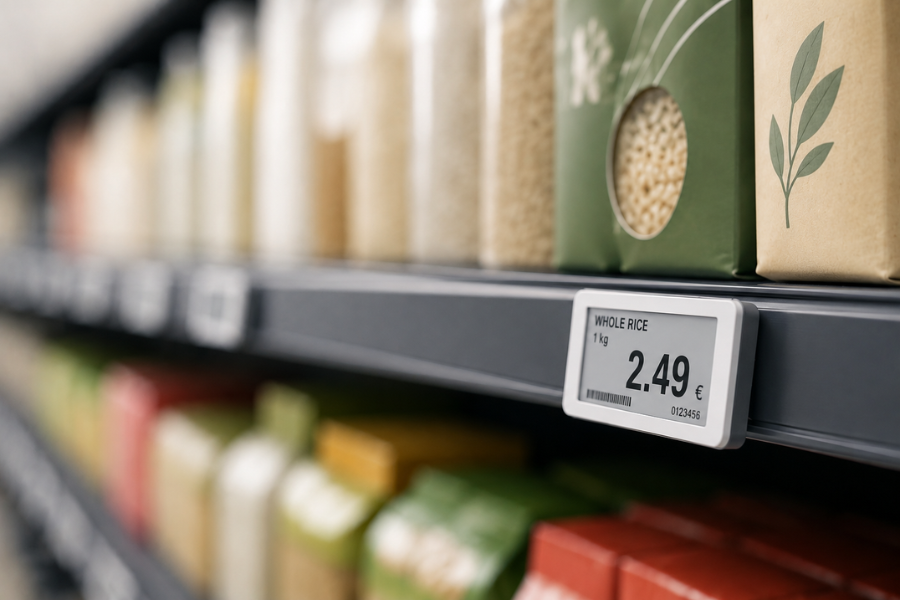
For decades, the paper price tag has been a familiar fixture of the grocery shopping experience. Shoppers have relied on them to check prices, and store staff have spent countless hours manually updating them to reflect promotions and price changes. That era is now being challenged. In 2026, a significant transformation is taking place on supermarket shelves across Europe as Electronic Shelf Labels, small digital displays that replace traditional paper tags, are being rolled out at an unprecedented scale. But as the technology moves from pilot projects to mass deployment, a debate has emerged over whether the benefits justify the costs and whether the technology serves consumers or creates new ways to exploit them.
The Scale of Europe’s ESL Rollout in 2026
The United Kingdom is at the epicentre of this transformation, with the country’s largest supermarket chains all committing to major ESL deployments in 2026.
One of the UK’s leading grocers has confirmed that electronic shelf labels will be installed across its supermarket and convenience estate over the next two years. The retailer has entered a multi-year partnership with a digital store solutions firm to install ESLs in around 3,000 stores, following trials in 2025. The phased rollout will start with four shops, one convenience store and three large stores, before a full launch over the next two years. The labels are customised for the grocer and are capable of displaying colours, “unlocking future opportunities to display retail media or additional information for customers”. A managing director for UK operations stated that moving to a digital system would support sustainability ambitions by significantly reducing paper use while allowing colleagues to focus on serving customers. According to an industry analyst, the scale of this rollout is likely to be in the region of 55 to 65 million ESLs.
This particular retailer is following in the footsteps of several competitors who have already begun their own transitions. One major UK supermarket chain became the first large grocer in the country to adopt the technology across its entire estate when it announced in October 2025 that it would partner with a solution provider to install electronic shelf labels across all of its 497 supermarkets. The project, which commenced in early 2026, will see 10.8 million smart electronic shelf labels installed. The digital labels will eliminate traditional paper labels throughout the store, providing clear and accurate price and product information while automating a repetitive manual task to free up colleagues to concentrate on customer service.
Another major UK grocer has been trialling electronic shelf-edge labels in three of its larger format stores since late 2025, testing the technology’s impact across different categories. The move follows similar initiatives by other leading chains, including some of the UK’s largest discounters, other major supermarket operators and prominent upmarket grocers, all of which are now operating or installing the technology.
The ESL revolution is by no means confined to the UK. Across continental Europe, some of the largest retailers are making equally significant commitments.
A leading global food retailer has entered a strategic partnership to deploy next-generation smart store technology at scale across its hypermarkets and supermarkets in France as part of its 2030 plan. The retailer has chosen to digitise all of its hypermarkets and supermarkets in France by 2030. This major industrial partnership covers the deployment of the latest-generation electronic shelf labels, smart rails and AI-driven cameras to transform operational efficiency and the in-store customer experience. In February 2026, the retailer decided to introduce an additional supplier for the sourcing of digital in-store solutions based on electronic shelf labels in France.
In the home furnishings sector, a leading European retailer has expanded its long-standing partnership through a major new agreement supporting the retailer’s next phase of store modernisation. The agreement includes the upgrade of electronic shelf labels across the retailer’s already deployed 450 Nordic stores, representing approximately 1.2 million ESLs, and the roll-out of the solutions in 750 additional stores across Europe, representing approximately 3 million ESLs. By 2027, the deployment is expected to scale to approximately 2,500 stores across the Nordic, DACH and BENELUX regions. An executive vice president at the retailer said that as the company continues to modernise its stores across Europe, it is investing in solutions that provide greater scalability, operational efficiency and flexibility for the future.
In Germany, a drugstore chain is installing electronic shelf labels in 100 stores, viewing them as a foundational technology to integrate with other innovations. The new system enables more efficient energy use, making ESLs economically viable, while enhancing in-store operations such as online order picking and inventory management. An industry analyst noted that retailers can view ESLs not just as a pricing tool but as a gateway to a broader digital transformation, especially when combined with robotics and real-time data.
In the Netherlands, a supermarket chain has signed an agreement to upgrade 265 of its stores with new electronic shelf labels. The rollout is planned for 100 stores during 2026 and 165 stores during 2027. The upgrade will involve a transition from three-colour labels to four-colour labels with more eye-catching graphics, with the move aiming to engage shoppers and improve shelf communication.
At the EuroShop 2026 retail exhibition in Düsseldorf, it was apparent that a lot of ideas that were once pilots and concepts are now moving toward becoming scalable solutions. The colour range of ESLs has expanded, allowing retailers and brands to have bolder images at the shelf-edge and provide retail media space at a cheaper cost than LED strips. ESLs are being made interactive, allowing shoppers to view product information and additional messaging at the shelf-edge. Power sources and materials used in design are also evolving to be more sustainable.
The Technology and Its Benefits
One of the key benefits of the new generation of ESLs is their integration with other store systems. New digital shelf labels can integrate with digital shelf-edge cameras to efficiently guide colleagues to product gaps, speeding up shelf replenishment and integrating with e-commerce applications to make online picking easier and more accurate. ESLs can also ensure that loyalty card savings and offers are instantly communicated to customers at the shelf edge. Other retailers’ labels feature new LED technology that will help staff identify the right products when picking online orders.
The appeal for retailers is clear. ESLs enable retailers to automate pricing updates, reducing the manual effort required for price changes and inventory management. With ESLs, retailers can adjust prices with just a few keystrokes. This capability allows retailers to respond quickly to fluctuating costs, improve pricing accuracy and reduce labour-intensive tasks. One industry analyst noted that while sustainability is cited as a driver, the more material benefit is labour cost reduction. The analyst highlighted that one major retailer is facing significant additional annual National Insurance costs and sustained wage investment exceeding £1 billion over the past five years. Beyond cost, ESLs position retailers to improve pricing agility, strengthen execution and unlock future retail media and in-store data opportunities.
The Cost of Going Digital
Despite the efficiencies, the financial barrier to entry remains substantial. The initial investment in ESL hardware, software and integration can be significant, particularly for large stores. Retailers also need gateways to send updates and software to manage the labels. Beyond the upfront costs, there are ongoing operational expenses. ESL modules may require regular maintenance and battery replacements, which add to operational costs and complexity. The technology also demands compatibility with existing point-of-sale systems and software, requiring integration efforts and potential disruptions. Staff require training to effectively use and manage ESL systems, and resistance to change can be a limitation.
Technical Failures and Reliability Concerns
Perhaps the most visible challenge facing ESL adoption is the technology’s reliability record. In April 2025, a glitch in one retailer’s ESL system forced the closure of all 185 of its stores due to incorrect shelf pricing. In Europe, degraded ESL displays disrupted promotional campaigns across millions of tags in Germany, France and the Netherlands, prompting time-consuming manual checks and operational delays. Similar technical glitches have been reported elsewhere. These incidents have underscored the need for robust implementation strategies and well-defined contingency plans. When pricing moves faster, mistakes get harder to catch. Inconsistent pricing across store locations due to ESL errors can undermine promotional strategies and damage consumer trust. Retailers must weigh short-term savings against long-term operational stability.
Consumer Trust and the Fear of Surveillance Pricing
Beyond the technical and financial considerations, ESLs have ignited a broader consumer trust crisis. While some consumers say they are more likely to shop at a store that replaces paper tags with digital ones, indifference continues to dominate: a significant proportion of consumers say digital price tags would have no impact on where they choose to shop. Worryingly, a large minority say they would be less likely to shop at a store using the technology.
A May 2026 poll of 1,000 US voters commissioned by a major union found that 65% of voters believe ESLs will lead to rising costs. Another survey found that 73% of Americans have a negative view of the US economy, 66% are worried about grocery costs and 72% do not trust stores to use ESL technology responsibly. A significant majority are in favour of banning ESLs outright.
The primary concern driving this distrust is the potential for “surge pricing” or “dynamic pricing”, the practice of adjusting prices in real-time based on demand, time of day or other factors. Critics worry that ESLs could open the door to predatory pricing practices, such as raising prices during busy periods. There are also concerns about “surveillance pricing”, using data collection tools and AI to create individualised prices for shoppers. One union has warned that with access to personal information, grocery giants could introduce surveillance pricing, charging different customers different prices based on who they are.
Retailers have pushed back against these accusations. One major retailer’s chief operating officer stated that “we don’t typically do the things you just described. Never is a long time, so I’m loath to say never, but we don’t do that as a policy. It’s not our approach, and we want to have consistent prices that build trust with customers”. The same executive said the labels are “absolutely not collecting people’s personal information”. Other retailers have similarly denied using ESLs for surge pricing.
Despite these assurances, consumer advocates view the technology as a “slippery slope.” As one consumer put it: “If you can get away with doing five or 10 cents at a time, eventually you’re going to do 50 cents or a dollar”.
Privacy and Data Protection Risks
The integration of ESLs with data collection technologies introduces serious privacy implications. Retailers may collect biometric data, such as facial scans, without obtaining proper consent, potentially violating biometric privacy laws. Even beyond biometric data, the broader collection and use of consumer information, such as shopping behaviour or demographic profiling, raises questions about data security, transparency and consent. ESLs can also be vulnerable to hacking or tampering, requiring robust security measures to protect pricing data.
The Labour Question
A major union of grocery, retail and food processing workers has been vocal in its opposition to ESLs. The union argues that introducing electronic shelf labels could lead to the loss of grocery jobs, as skilled workers are potentially replaced by the technology. The union has also raised concerns about the unilateral ability for companies to change prices, which could open the door to surveillance pricing.
The Food Industry Association has countered that ESLs will not cost workers their jobs and will instead help grocers deal with labour shortages. Retailers argue that ESLs lift the manual burden for store employees and make it easier to lower prices on perishables to help keep them from going to waste.
Regulatory Scrutiny Intensifies
The controversy has not gone unnoticed by lawmakers. In the United States, legislation has been introduced that would ban electronic shelf labels in grocery stores larger than a certain size. The Protection from Predatory Pricing Act has been passed by lawmakers in Maryland. Other bills would prohibit price gouging, surveillance-based pricing and require covered stores to disclose their use of facial recognition technology. Passage of these bills would mark a significant step forward in consumer protection and privacy.
In Canada, the Manitoba government has released language for an updated Business Practices Act intended to prohibit retailers from using consumers’ personal data to increase the price of goods for a specific individual, either online or through the use of electronic shelf tags.
A Technology at a Crossroads
The year 2026 marks a pivotal moment for ESL technology in Europe. One industry analyst observed that although ESLs have been available for decades, 2025 marked the first time retailers in many markets moved beyond limited trials to widespread usage. According to the same analyst, the appeal of the technology has grown as business costs have increased, with retailers benefiting from improved price accuracy while shoppers see better communication of savings.
From the 10.8 million labels being installed across one UK grocer’s entire estate to the 55 to 65 million labels another is planning, and from the digitalisation of an entire French retailer’s hypermarkets to the expansion across thousands of stores for a European home furnishings leader, the momentum is undeniable.
Yet the path forward is far from certain. Retailers face a complex balancing act: delivering the operational efficiencies and cost savings that ESLs promise, while addressing legitimate consumer concerns about pricing fairness, privacy and job security. The great ESL rollout is not just about changing how prices are displayed; it is about deciding what kind of retail future consumers and workers are willing to accept.
Sources:

You may also like
Why Every Online Order May Soon Get a Made to Measure Box
AI Agents Step Into the Store Manager’s Office