When Facial Recognition Fails in Retail
In August 2026, a major UK supermarket chain suspended the use of live facial recognition technology at one of its London branches after a customer was wrongly accused of shoplifting and asked to leave. The incident has renewed debate about the use of AI-powered surveillance in retail settings, the accuracy of facial recognition systems and the risks of over-reliance on automated decision-making.
The Incident
On 6 August 2026, a customer was shopping at a supermarket in East Dulwich, south-east London. He was purchasing supplies for a stand-up comedy event being held at the adjacent football club. He had scanned his items and loyalty card at a self-service till and was waiting for a staff member to approve an alcohol purchase.
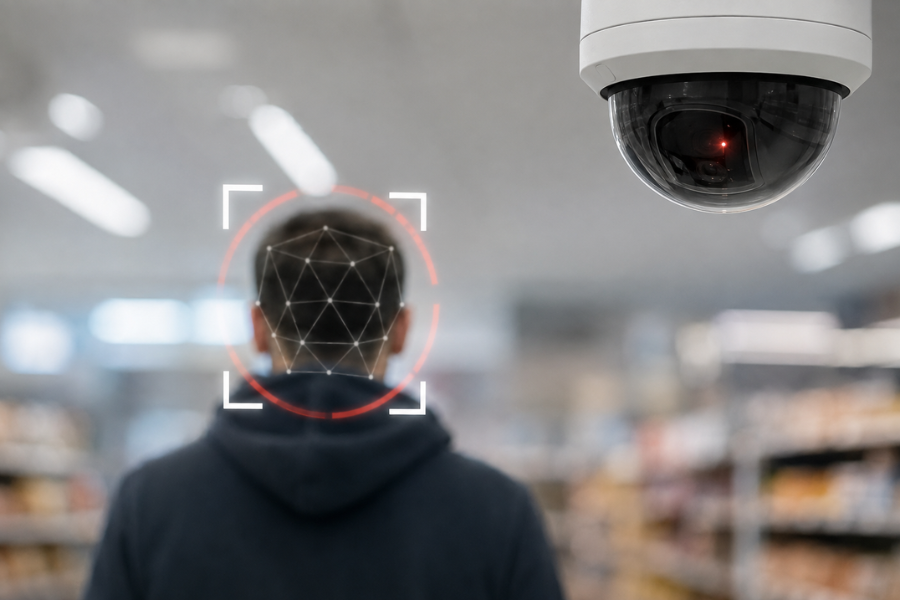
Instead of receiving assistance, he was approached by two members of store management who informed him that he could not be served due to an incident “earlier in the week” and that he had to leave. According to the customer, a staff member told him he had been “identified by the AI” and the cameras had flagged him. He was escorted off the premises. As he looked back from the entrance, he saw an overhead CCTV monitor displaying an alert with a red circle surrounding his face.
The customer described the experience as a “terrifying glimpse of the future”. He questioned the logic of the staff’s response, noting that a shoplifter would not scan items through a self-service till or use a loyalty card. He expressed concern that staff were “just blindly following the machine’s orders” without pausing to consider the context.
The Retailer’s Response
The supermarket chain contacted the customer the following day to apologise. The company maintained that the incident was caused by “human error” rather than a failure of the facial recognition software itself.
A spokesperson confirmed that the technology had been paused at the branch while an investigation takes place. However, the company defended the wider rollout of the system, citing escalating violence against retail workers. The supermarket also emphasised the system’s accuracy, stating that the technology has a 99.98% accuracy rate and that every match is reviewed by a trained manager.
The customer challenged this defence, arguing that even a 0.2% error rate affects a significant number of people given the volume of shoppers passing through stores each week. He noted that he was not the only person to have been wrongly flagged by the system.
The Technology Supplier
The facial recognition system used by the supermarket is supplied by a technology firm that provides live facial recognition systems to multiple UK retailers. The supplier responded to the incident by stating that its technology was not at fault. A spokesperson said that a correct alert was sent to the retailer, but that it was “subsequently subject to human error in the way it was handled and communicated by the retailer”.
The firm explained that it had suspended the retailer’s access to its system as a precautionary measure while the retailer reviews its use of the system and undertakes appropriate actions, including further staff training where necessary.
The technology has previously been the subject of controversy. In July 2026, it was reported that the firm runs its technology through cloud infrastructure, using a major cloud provider’s facial recognition software as “a secondary check for accuracy alongside our own software”.
A Pattern of Errors
The East Dulwich incident was not an isolated case. It was at least the second time in recent months that the same supermarket chain’s facial recognition system led to an innocent shopper being wrongly challenged. In September 2025, another customer was ordered out of a branch after being wrongly flagged by the same software. The security firm later confirmed that the customer was not even on its system. That incident was also attributed to “human error” by both the retailer and the technology firm.
The technology supplier has been involved in similar cases with other retailers. In 2024, a shopper was falsely identified at a discount store. In 2025, a similar incident occurred at another retail chain.
Staff Training Concerns
The customer expressed sympathy for store staff, suggesting that they were not adequately equipped to implement the technology properly. He noted that mistakes are going to happen and that staff are “not being equipped to implement the AI properly”. This raises questions about how retailers prepare their employees to work with AI-powered surveillance systems and respond to alerts in a way that balances security concerns with customer rights.
Calls for Wider Suspension
The customer has called for the technology to be suspended in all of the retailer’s stores, not just the branch where the incident occurred. He argued that if there is a potential problem with the technology or its implementation in one store, there are potential problems in all stores.
He also raised concerns about the broader societal implications of AI surveillance. “Anyone could be falsely accused and at some point that will be someone vulnerable, someone with mental health issues like anxiety,” he told The Guardian. “It’s inevitable.” He expressed worry about the confidence-destroying effect of such an experience on a younger person or someone less willing or able to stand up for themselves.
Broader Context
The incident comes amid ongoing debate about the use of facial recognition technology in UK retail. Critics argue that the technology treats all shoppers as suspects and infringes on privacy. Privacy advocates have raised concerns about the use of biometric surveillance in public spaces and the potential for errors to cause significant harm to innocent individuals.
Retailers, however, argue that the technology is necessary to combat rising shoplifting and protect staff from abuse and violence. The tension between these competing concerns highlights the challenges of implementing AI-powered surveillance systems in complex, real-world environments.
Sources:

You may also like
Why Every Online Order May Soon Get a Made to Measure Box
AI Agents Step Into the Store Manager’s Office