The Rise of Unified AI for Commerce and Order Management
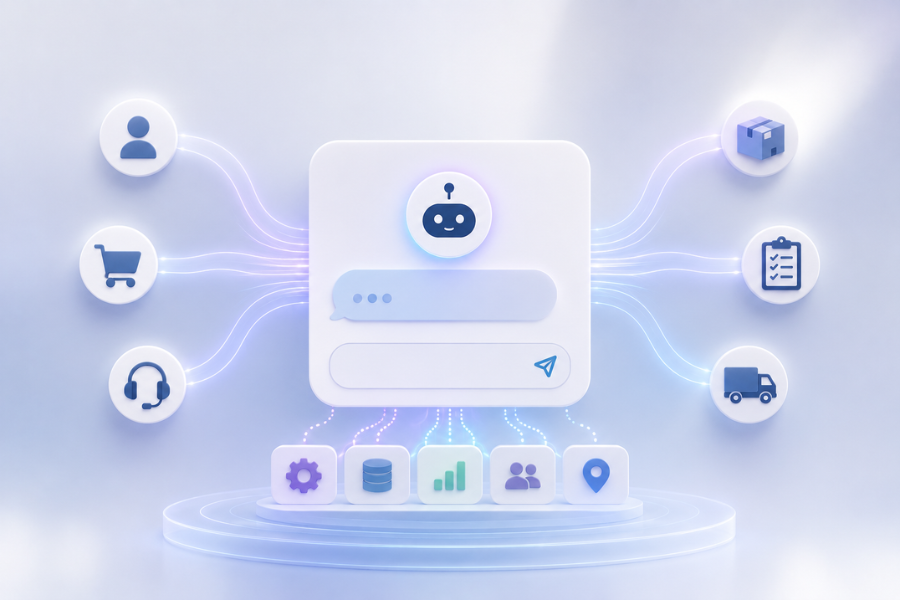
In August 2026, a new category of enterprise software began to take shape: unified AI interfaces that combine commerce operations and order management into a single conversational experience, replacing multiple specialised agents with one orchestration layer. A commerce and order management platform announced the general availability of a fully redesigned Agentic Layer that handles every agentic interaction across commerce and order management in a unified AI experience. For clients, there is one interface, one conversation and one intelligent agent, while a coordinated network of specialised agents operates invisibly in the background.
The Shift from Multiple Agents to a Single Agentic Layer
The software is designed to handle both commerce operations and order management through one data model. This allows the system to draw on the same live information whether it is answering customer questions, adjusting settings, producing reports or managing operational workflows.
A single agent now surfaces as the primary interface for all roles, from shoppers and customer service representatives to merchandisers, fulfillers and supply chain managers. Behind that interface, an Agentic Framework dynamically routes work across specialised agents based on role, context and task, without the client needing to know or care which agents are involved.
Every function in the platform draws from a single, unified data model that spans both commerce and order management. According to the company, this means every interaction is grounded in the same consistent, real-time data.
The Model-Agnostic Approach
A central element of the launch was the decision to make the software model-agnostic. Customers can connect different large language models rather than rely on a single provider. The system supports models from multiple AI platform developers, as well as open-weight alternatives.
The “Bring Your Own Model” approach is intended to let customers use models already adopted elsewhere in their organisations and switch providers over time. This reflects a broader debate in enterprise software over whether suppliers should build tightly around one model provider or offer a layer that sits above several. The company argued for the latter, linking that strategy to customer concerns about supplier dependence and rapid shifts in the AI market.
As the Chief Product Officer stated at launch: “The market is moving fast, but moving fast toward the wrong architecture creates debt that compounds. We made a deliberate choice: one agentic experience for your team to work with, one data model connecting commerce and order management and the freedom to choose any AI model you trust.”
Operational Focus
Unlike some AI tools that focus primarily on customer-facing chat functions, this approach centres on operational use cases. Examples include asking why an order was routed to a particular location, investigating discount errors at checkout, comparing average order value across periods and reviewing shipment performance by node, carrier and region.
One aim is to reduce the need for staff to query reports, logs or databases directly when trying to understand day-to-day issues. In practice, this places the product within a growing category of software tools that apply generative AI to business process questions inside retail and supply chain systems.
The platform also introduced saved prompts that can run on demand, on a schedule or automatically when a commerce or order management event occurs.
Potential Benefits and Challenges
Documented benefits include a single conversational interface replacing multiple specialised agents, reducing the need for staff to navigate different systems for different tasks. The unified data model ensures that every interaction is grounded in consistent, real-time information across commerce and order management. The model-agnostic approach gives organisations flexibility to choose and switch AI providers.
The operational focus means the system can help retail teams answer questions about order routing, discount errors, average order values and shipment performance without requiring SQL queries or manual report digging.
Challenges and considerations include the complexity of migrating from multiple specialised agents to a single unified interface. Retailers must adapt their workflows and train staff to interact with a conversational AI rather than traditional software interfaces.
The model-agnostic approach, while offering flexibility, also introduces complexity in managing multiple AI models and ensuring consistent performance across providers. Organisations must evaluate which models best suit their specific use cases and maintain governance over AI usage.
As with any enterprise AI deployment, concerns about data privacy, security and accuracy remain. Staff must trust the system’s explanations and recommendations and organisations must verify that the AI’s outputs are reliable before making operational decisions based on them.
Industry Context
The August 2026 announcement reflects a broader industry trend toward unifying commerce and order management through AI. Other players in the space have made similar moves. One major platform introduced Agentic Order Management as part of its commerce platform in June 2026, described as a conversational interface for order fulfilment that unifies inventory across physical and digital locations.
In January 2026, an order management solution won an industry award in the Omnichannel & Unified Commerce category, positioning itself as an Agentic Order Management System and marking a shift from rule-based logic to an agent-driven architecture.
Another commerce platform, announced in April 2026, combined enterprise infrastructure upgrades with AI co-pilots that run on unified commerce data, unifying identity management, payments, orders and inventory in one platform.
Conclusion
The August 2026 launch of a unified AI interface for commerce and order management represents an evolution in enterprise software. By consolidating multiple specialised agents into a single, conversational interface with a unified data model and model-agnostic architecture, it offers a new approach to how retailers and brands manage their commerce operations.
The shift to one unified interface reflects a broader industry movement toward simplification and integration in enterprise software. As AI continues to reshape retail operations, the ability to manage complex commerce and order management workflows through natural language, without needing to navigate multiple systems or write queries, may become an increasingly important capability for retailers and brands.
However, the success of such platforms will depend on whether they can deliver reliable, accurate results, build trust with users and provide tangible operational improvements over existing systems.
Sources:

You may also like

Why Every Online Order May Soon Get a Made to Measure Box

AI Agents Step Into the Store Manager’s Office