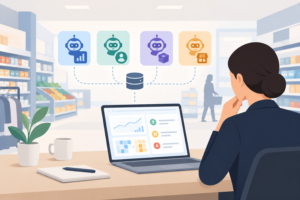
The Checkout Supervisor Moves to a Control Room
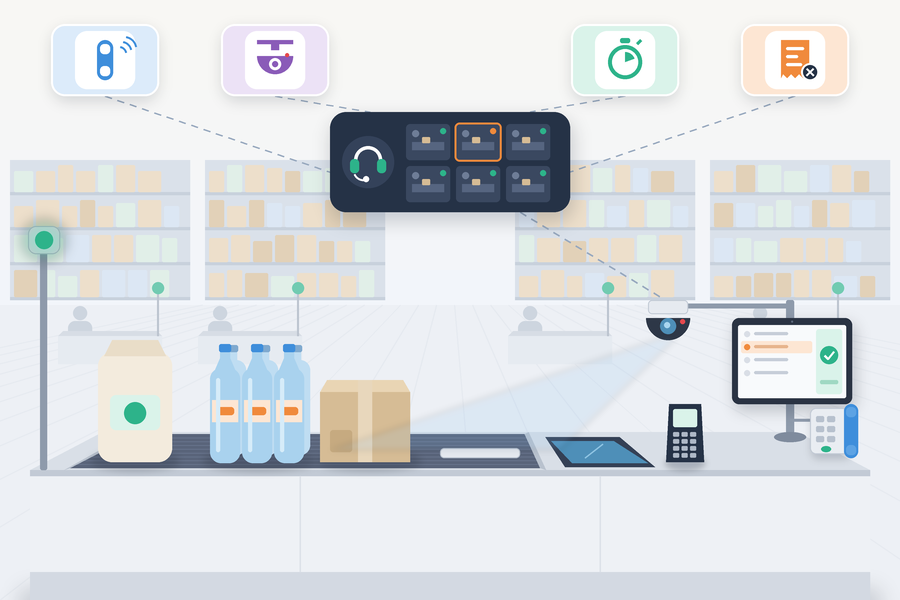
At 313 cash and carry stores across Brazil, a cashier who needs to cancel an item no longer waits for a supervisor to walk over. The cashier picks up a phone at the till that rings in only one place. In a control room, a remote supervisor watches that checkout through its camera and fixes the problem in the till software from a distance. A Brazilian cash and carry chain completed this remote supervision model across its whole network in August and reported the first results this week. The idea is simple. It matters far beyond Brazil, because the checkout supervisor is one of the most stretched roles in a busy store and staff shortages are pushing retailers in markets such as Japan to rethink where store work is done.
What happened
The chain says it serves about 40 million people a month from stores in 24 states and the Federal District, the capital region around Brasília. Development began in 2025 with a laboratory test and a proof of concept in a single store. A pilot followed in 13 stores and was later extended to 18. Along the way the team adjusted the software, the store procedures and the automation inside the checkout system. The national rollout ran from March to August 2026.
The scale is now considerable. In July alone the remote desk handled 175,000 calls, according to the company. It says 59% of them were resolved in an average of about 20 seconds. Calls to the desk fell 43% between June and July. The entire network is covered by 11 remote supervisors per shift, or 22 people across two shifts. Supervisors inside the stores have not disappeared. The chain says the system does not replace store teams and is meant to remove the walk to the till for problems that can be solved remotely.
How checkout help used to work
Anyone who has stood in a supermarket queue knows the moment. The price on the shelf does not match the price at the till, or a shopper changes their mind about an item that has already been scanned. The cashier cannot fix it alone. Cancelling an item, correcting a price, opening the cash drawer or accepting an exchange voucher all need someone with higher authority. The rule protects the retailer against fraud and mistakes. It also stops the queue.
At the Brazilian chain the old process relied on a button. The cashier pressed it, a red light came on at the checkout and a supervisor came to help. Each supervisor covered about ten checkouts on average, and in a large store that often meant crossing the shop floor. The chain’s head of information technology told a Brazilian mobile technology publication that an average intervention used to take seven minutes. In a queue of full trolleys, seven minutes is a long time.
How the remote desk works
The new model moves the authority rather than the cashier. Each checkout has a fixed telephone that dials only the control centre. When something goes wrong, the cashier calls. A remote supervisor sees the till through its camera in real time and connects to the checkout system from the control room. The supervisor can then approve the cancellation or correct the price without anyone leaving their post.
The cases it handles are small and frequent. They include item cancellations, products keyed in by mistake, price differences between shelf and till, a change of cashier at a till and exchange vouchers. None of the parts is exotic. A live camera view of each checkout is combined with remote access to the till software and a dedicated voice line. What changes is the operating model. One central team now does work that used to be spread thinly across hundreds of shop floors.
The chain developed the system with its existing checkout software provider. That detail matters for anyone thinking of copying it. Remote supervision depends on being able to change how a till grants permissions, so the work sits as much in software and procedures as in hardware.
Remote store staff around the world
Brazil is not the only market moving store work behind a screen. In Japan a major convenience store chain began using remotely operated avatars in November 2022, mainly to help shoppers who find self checkout difficult. Operators work from home and appear on a screen as animated characters. By late 2024 about 60 people were doing the job for 18 stores in Tokyo and five other prefectures, according to a Japanese national newspaper. They included people with disabilities and part time workers who can work as little as once a week. Around the start of 2025 a human resources publication reported that the scheme covered 28 stores and that the first operator based abroad, in Sweden, was using the eight hour time difference to cover early morning shifts. Across Japan, the number of companies using remotely operated robots or avatars for customer service rose from 11 in 2018 to 42 in 2023.
South Korea has taken a different route. Major convenience chains staff stores by day and switch them to unmanned operation at night. The doors lock after hours and customers swipe a payment card or scan a code to get in, which helps trace offenders. One chain runs 1,756 of these hybrid stores and uses infrared sensors near the counter to alert owners to suspicious movement. Owners of fully unstaffed shops often watch live camera feeds themselves.
In North America the remote idea reached the counter through restaurants. A small New York chicken restaurant group has used cashiers working from the Philippines, who appear on a large screen to greet customers and answer questions about the menu. A Canadian restaurant chain ran a similar system with remote workers in Nicaragua and ended it in August 2023.
Europe offers evidence on one specific remote task. A Dutch study published in 2017 sent mystery shoppers on 132 attempts to buy alcohol in supermarkets. Stores that checked ages remotely achieved full compliance with the legal age limit in 87% of purchases, against 57% in the control group. Stores relying on identity card readers did worse, at 34%.
What retailers gain
The most visible gain is time at the till. A queue that stops for seven minutes while a supervisor crosses the store frustrates everyone in it. When most calls are cleared in about 20 seconds, the cashier keeps scanning and the next shopper keeps moving.
The second gain is in how supervision is staffed. Under the old model each supervisor was tied to roughly ten tills in one store. A central desk pools that demand across the whole network, which is how 22 people on two shifts can cover the remote side for 313 stores.
Third, a single desk turns scattered interruptions into one stream of calls that can be counted and managed. That is how the chain can say it handled 175,000 calls in July and saw call volumes fall by 43% from the month before. Data like this can show which stores and which kinds of problem generate the most calls.
The Japanese experience points to a wider gain for the workforce. Remote roles can be done from home and in short shifts by people who could not stand behind a counter for a full day. In Japan more than 62% of convenience store operators said in a business survey that they had struggled to hire enough part time staff, so a wider pool of workers has real value.
The limits and the risks
Remote supervision only helps when the cashier calls. Every case still starts with a person picking up the phone. Problems that need hands still need someone at the till, such as a damaged pack or a dispute over cash.
The model also concentrates risk. A store whose approvals sit in a distant control room depends on its network, its cameras and its phone line. If any of them fails, the old walk to the till returns, so stores still need enough local supervisors to fall back on.
Cameras pointed at tills raise their own questions. The live view that lets a remote supervisor approve a cancellation also lets the employer watch cashiers at work. Retailers adopting the model need clear rules on who watches, when and for what purpose.
The international record shows how quickly remote store work can become a labour controversy. The Canadian chain that used remote cashiers in Nicaragua paid them $3.75 an hour in 2022, when the minimum wage in Ontario was $16.55, according to a US business magazine. The same magazine estimated that the remote cashiers serving the New York restaurants earned about $2.50 an hour. The Brazilian model runs the desk from the company’s own control centre. The efficiency case behind it is still the same, with fewer people supervising more checkouts.
Unstaffed operation carries a further risk. In South Korea 13,617 crimes were recorded at unstaffed stores in 2023 and 2024, and nearly 80% of them were theft. Remote oversight can approve a transaction. It cannot stop someone walking out with goods.
The checkout learns to see
For retailers elsewhere the lesson is less about devices than about where authority sits. The harder work is redesigning permissions, procedures and staffing so that a supervisor’s approval can travel over a network. The Brazilian chain began development in 2025 and needed a pilot that grew from 13 to 18 stores before it scaled to the whole network.
The next step is already in the laboratory. The chain plans to add image recognition to the checkout cameras so that the system can spot some problems on its own. The first case being tested is a familiar one. A cashier enters the wrong number of units for a multipack of soft drinks. In the version under test the system would suggest a correction and the cashier would confirm or reject it. The company says that confirmation might become unnecessary if accuracy proves high enough. Tests are expected in the first quarter of 2027, and the feature will depend on their results. Until then every remote intervention still begins with a phone call.
That sequence is worth watching. First the supervisor leaves the till for a control room. Then software starts to take on part of the supervisor’s job. Home based avatars in Japan and night time hybrid stores in South Korea point in the same direction from different starting points. Routine checkout decisions are increasingly made somewhere else by fewer people, and possibly with help from machines that can see what happens at the till.
Sources
[1] Mobile Time
[6] Em Tempo
[7] Asia News Network (The Japan News)
[8] HR Grapevine
[10] Fortune
[11] University of Twente

You may also like
Drone Delivery Takes Off Across an Entire US Metro
Why Every Online Order May Soon Get a Made to Measure Box