Quantum Computing Moves From Theory to Reality in Retail
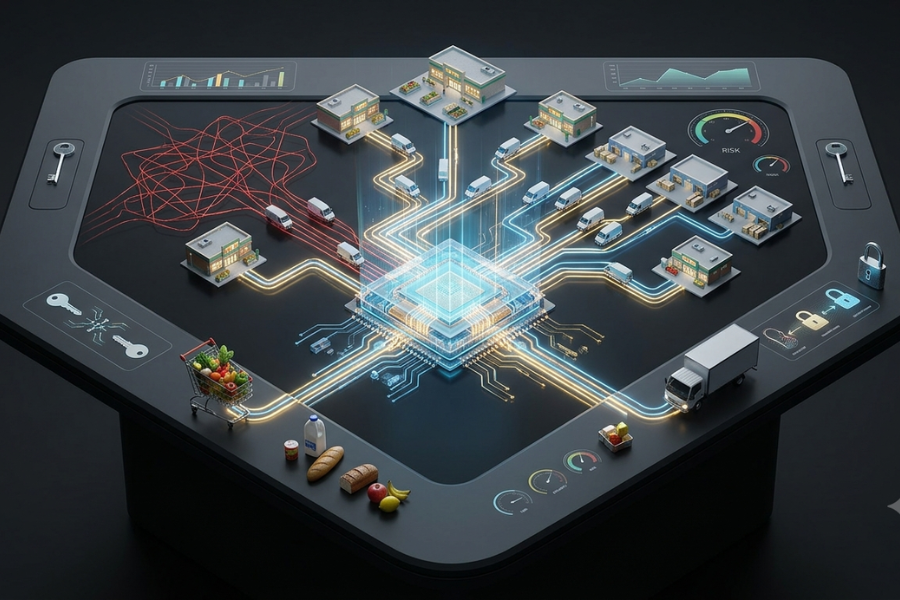
For much of the past decade, quantum computing existed in the realm of theoretical physics and laboratory experiments, a technology with immense promise but little practical application. In 2026, that is beginning to change. The retail industry, long focused on artificial intelligence and machine learning, is now exploring quantum computing as the next frontier in operational efficiency, supply chain optimisation, and demand forecasting.
From Theory to Practice
In May 2026, a major grocery retailer and a state nuclear corporation completed the first pilot project in the Russian retail sector using quantum computing for supply logistics optimisation. The project, which ran from October 2025 to April 2026, focused on improving demand forecasting and supply planning from distribution centres to retail outlets.
The results were notable. The use of quantum computing demonstrated the potential to increase the efficiency of goods shipment planning by 30 to 40 per cent. The prototype, developed on the basis of linear programming, improved the quality of aligning supply time series, ultimately increasing the reliability of providing consumers with the necessary range of products across all retail locations.
The project is positioned as a starting point for the gradual, phased introduction of quantum computing into retail operations, with preparations for broader adoption expected on a horizon of 2030 to 2035.
Quantum Computing in Grocery
The technology is not limited to a single pilot. At the National Grocers Association Show in February 2026, quantum computing was presented to the grocery industry as a transformative technology that could one day become as familiar as mainstream AI tools.
One of the key applications identified was preparing for viral food trends. The grocery industry loses billions of dollars annually because it is unprepared for sudden surges in demand for trending products. A speaker at the conference explained that quantum computing can alert retailers earlier, before stores run out of stock on trending products, by identifying when a product begins gaining traction on social media. While quantum computing cannot predict viral food trends, it can identify when a product is gaining momentum and trigger specific supply chain actions.
The speaker used a simple analogy to explain the difference between traditional and quantum computing. Traditional computing evaluates one path at a time and can take hours to identify the fastest route through a maze. Quantum computing evaluates all possible paths simultaneously, identifying the quickest route in seconds.
Some grocery retailers have already been using the technology for years. One Canadian grocer has used quantum computing for more than four years on operational functions such as route optimisation and labour-hour management. Another major retailer uses it for line scheduling and managing its product portfolio.
Addressing the Complexity of Supply Chains
Quantum computing is particularly well-suited to optimisation problems, exactly the kind that characterise large-scale retail supply chains.
Quantum computing enables real-time demand forecasting, dynamic inventory optimisation and ongoing supply network recalibration. Supply chains can develop into self-correcting, predictive systems that react intelligently to change, increasing resilience and efficiency.
The Quantum Threat to Retail Security
While quantum computing offers significant opportunities, it also presents a serious threat to retail cybersecurity. The advent of quantum computing poses a formidable challenge to the security of digital information, particularly for the e-commerce sector, which relies heavily on cryptographic protocols for secure transactions and data protection.
In June 2026, a UK cybersecurity firm disclosed that it was working with a major retailer to protect its payment infrastructure against the growing threat of quantum computing. The firm specialises in protecting against the threat of quantum computing, which could allow bad actors to bypass existing safety measures and hack into sensitive data.
Industry surveys highlight the urgency. In a December 2025 survey of 1,750 IT leaders, six in 10 said data stolen today could pose a material risk to their business in the future, even if it is only decrypted years from now. The quantum threat has changed the equation entirely; attackers no longer need to decrypt stolen information immediately; they can harvest encrypted data now and decrypt it later when quantum computers become capable.
The Market Takes Shape
The market for quantum-enhanced retail applications is beginning to take shape. The quantum-enhanced demand forecasting market, which improves e-commerce by delivering highly accurate and fast demand predictions, is projected to grow from $2 billion in 2025 to $2.64 billion in 2026 at a compound annual growth rate of 32 per cent. By 2030, it is expected to reach $7.99 billion.
Broader market estimates suggest significant growth ahead. The global quantum computing market is estimated at $2.02 billion in 2026 and is projected to expand at a compound annual growth rate of 20.7 per cent to reach $13.23 billion by 2036. The precision quantum retail systems market was valued at $0.85 billion in 2025 and is projected to grow to $1.45 billion by 2034.
A speaker at the NGA Show estimated that the grocery industry alone could see quantum computing reach $26 billion by 2030. The typical cost to access quantum computing services, she noted, is roughly $60,000 annually, with retailers seeing return on investment through route optimisation, reduced fuel costs, lower overtime pay and improved forecasting.
The Technology Matures
The conversation around quantum computing is shifting gradually from theoretical breakthroughs to commercial traction. This year has brought some of the first clear signs that the technology is moving from research labs into mainstream computing infrastructure.
One of the most concrete signals came from a major technology company, which in March 2026 introduced a programming layer that lets developers integrate quantum processors with traditional computing systems. Technology companies are also constructing cloud platforms around the idea of owning every significant enterprise computing shift before customers have a simple alternative.
Industry experts note that quantum computing is not the tech sector segment that will attract the most investor dollars in 2026 or 2027. However, a small share of disciplined investment capital is starting to move into this niche because the technology is finally starting to catch up to the marketing. One executive in the field stated that “over the next five-to-seven years, we’re going to start to see the first commercially useful small-scale quantum computers”.
Looking Ahead
The retail industry’s exploration of quantum computing in 2026 represents an early but significant step. The pilots completed in 2026 are modest in scale but meaningful in their implications. They demonstrate that quantum computing is no longer purely theoretical; it is being tested on real retail problems, with measurable results.
The technology still faces substantial hurdles. Error correction remains one of the big challenges, as qubits are fragile and prone to errors, making it difficult to construct systems stable enough for genuine commercial applications. For most retail workloads, quantum remains a “watch and wait” technology for the late 2020s.
Sources:

You may also like
Why Every Online Order May Soon Get a Made to Measure Box

AI Agents Step Into the Store Manager’s Office