Pavement Robots Move From Pilot Projects to Grocery Delivery
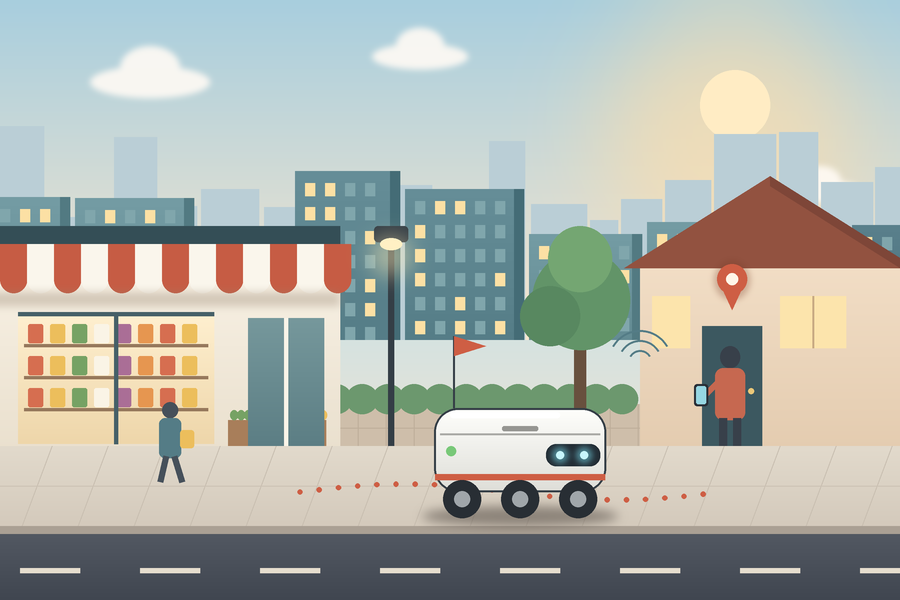
A small electric robot rolling along the pavement at walking pace, its lid locked until the customer opens it at the door, is about to become a familiar sight in more British towns. On 5 October 2026 a major UK food delivery platform announced an exclusive partnership with a US pavement robot company. Deliveries begin this month in London’s Canary Wharf business district, with Milton Keynes, Leeds, Stockton on Tees and Nottingham to follow. A day later a rival delivery platform said it had extended its robot trial with a national supermarket chain to Cambourne, a Cambridgeshire town of more than 12,000 residents, where groceries from the local store are now delivered only by robot. The two announcements reflect a wider shift. Robots that began as curiosities on university campuses are being built into mainstream delivery apps, carrying everyday grocery orders and attracting new rules in several countries.
From campus experiment to delivery network
The case for pavement robots starts with a simple observation. The last mile can account for up to half of transport costs, and most online orders are small enough to fit inside a compact robot.
The first generation went to work in residential neighbourhoods and on university campuses. The robots are small, six wheeled machines about 55 centimetres tall, weighing around 35 kilograms and able to carry up to three shopping bags. Twelve cameras and a combination of sensors, AI and machine learning let them map their surroundings, avoid obstacles and give way to pedestrians. By September 2022 one large operator had completed more than 3.5 million commercial deliveries across Estonia, Finland, Denmark, the UK and the US.
Scale has since grown considerably. By November 2025 that operator had passed 9 million deliveries with a fleet of more than 2,700 robots across over 270 locations, and it aims to exceed 12,000 robots by 2027. Newer operators have added more than half a million deliveries in cities such as Los Angeles, Chicago, Miami and Helsinki.
Three things set the current wave apart from the early pilots.
The first is distribution. Robots are being plugged into the largest food and grocery delivery platforms. One global food delivery platform began adding robots to its service in Leeds in December 2025, with several European countries following in 2026 and the US planned for 2027. In Los Angeles and Chicago, robot delivery through another major platform already involves nearly 600 merchants.
The second is the cargo. Supermarkets are now using robots for grocery orders. In the Cambourne trial a typical order is about 12 items. Milk, eggs, chicken and cucumbers are among the most popular products.
The third is capability. One operator says its robots work at Level 4 autonomy and can complete deliveries of up to two miles in under 30 minutes. The robots now joining the UK market process their data on board rather than in the cloud, and their software applies speed limits and routing rules specific to each location. Human operators still supervise the fleets remotely and can step in when needed.
How a robot delivery works today
For the customer, the process looks much like any other app order. The shopper places an order with a participating store or restaurant, the order is packed into the robot’s compartment, and the robot sets off along the pavement. On arrival the customer receives an alert and opens the lid through the app.
Behind the scenes, cameras and sensors build a live picture of the pavement while onboard AI chooses a path, slows for pedestrians and stops when needed. The robots travel at walking pace and are designed to use existing pavements without any special infrastructure. The UK partnership plans new depots and charging facilities in each region it enters.
The robots joining the UK market will also share real time data on pavement hazards, such as construction barriers and abandoned e scooters, with a navigation app used by blind and partially sighted people.
Where the robots are operating
Europe has been an early testing ground. Robots have operated in Estonia, Finland, Denmark and several UK towns, and Helsinki was the first European city for one of the newer operators. In England, robots have already worked in Milton Keynes, Cambridge, Bristol, Sheffield, Leeds and Barnsley.
In the US, pavement robots are active in major cities including Los Angeles, Chicago and Miami. The country is also seeing new designs. In September 2025 one of the largest US delivery platforms began rolling out its own robot in the Phoenix area of Arizona. Standing about 4.5 feet tall, it can travel on roads, pavements and driveways at up to 20 miles per hour and carries up to 30 pounds of cargo. The company built it for the suburban neighbourhoods where much of its business takes place.
In Asia, Japan created a legal route for delivery robots on 1 April 2023. A revision of its Road Traffic Act allows robots that meet set size and structural requirements to operate on public roads once the operating business files a notification.
The benefits
For retailers and delivery platforms, the most immediate benefit is reach. In Cambourne the robots allowed a supermarket to offer delivery in an area where its delivery partner had no previous grocery service. The platform says the robots help it serve places with limited delivery logistics.
The second benefit is capacity. Both UK platforms describe the robots as extra capacity alongside human couriers, which matters most during peak periods. The grocery platform says it is adding robot capacity ahead of Christmas after strong demand in Sunderland and Milton Keynes. The restaurant platform says most orders will continue to be delivered by its riders.
The third is environmental. The robots are fully electric. A study carried out with the council in Milton Keynes estimated that robot deliveries there had avoided more than 280,000 car journeys.
The UK partnership says each city will also gain jobs in robot operations, maintenance and logistics, supported by new depots and charging sites.
The challenges
The biggest open question in the UK is legal. Pavement robots operate in a legal grey area in England. The Highways Act 1835 bars carriages from pavements, and the Department for Transport has said there is no specific legislation for delivery robots. The government is expected to create rules for low speed autonomous delivery devices but has committed only to do so when parliamentary time allows. The UK partnership describes its rollout as phased and aligned with local regulations, with talks under way with councils.
Pedestrian groups are pushing hard in the other direction. A national charity for people on foot wrote to the UK Transport Secretary in June 2026 asking for clarity on the robots’ legal status and for national regulation. Its campaign urges ministers not to legalise them at all. The charity argues that robots add to pavement obstacles for wheelchair users, older people and blind or partially sighted pedestrians, and points out that some US and Canadian cities have restricted or banned delivery robots after reported collisions with pedestrians and blocked footways.
Labour relations are another pressure point. In October 2026 the trade union representing many UK delivery riders called the restaurant platform’s robot trials disappointing, saying they had not been negotiated with workers and that the company should invest in couriers’ pay. One of its organisers said innovation should not come at the expense of real people.
Public opinion is mixed. In a reader poll run by a technology news site, 48 percent said they would rather have a human deliver their order, while 31 percent said robot delivery was fine.
There are practical limits as well. Robots move at walking pace, carry small loads and suit short distances. Whether a customer can get a robot delivery depends on their location, on which merchants take part and on whether a robot is free at the moment of ordering.
What it means for retailers
For grocers and convenience retailers, the clearest fit today is the small top up order: a few essentials, delivered over a short distance, from a store close to the homes it serves.
Robot delivery also runs through the delivery platforms. In both UK cases the supermarket and the restaurants take part through a platform’s partnership with a robot operator, and shoppers order through the platform’s app.
Community relations matter as much as the technology. A retailer whose orders travel by robot shares in how those robots are received on local streets. Working with councils, disability groups and residents is part of the rollout, as the operators’ own talks with local authorities show.
The road ahead
The next 12 months will take robot delivery to four more UK cities and into more European countries through the large delivery platforms, with the US expansion to follow in 2027. One operator alone aims to exceed 12,000 robots by 2027, more than four times its fleet in late 2025. New designs that can travel on roads as well as pavements are widening the range of neighbourhoods robots can serve. In England, the shape of any national framework, and the conditions it sets on numbers, locations and safety, will decide how far and how fast the technology spreads.
Pavement delivery robots have moved a long way from their origins as campus experiments. They now carry supermarket groceries, operate inside some of the world’s largest delivery apps and run in cities across Europe and North America, with legal frameworks emerging as far afield as Japan. The case for them rests on reach, extra capacity and electric operation over short distances. The challenges are just as real: unsettled law in some markets, concern from pedestrian and disability groups, objections from couriers and a public that is still making up its mind. For retailers the technology is now a live option for small, short distance orders, alongside the questions it raises.
Sources
[1] Cambridgeshire County Council
[2] Retail Times
[4] The Robot Report
[5] Yorkshire Post
[6] TechRepublic
[7] Retail Gazette
[8] AZFamily
[9] Ministry of Economy, Trade and Industry, Japan
[10] Road Safety GB
[11] TechRadar

You may also like

Pay Later Moves From the Shopping Basket to the Shop Counter