AI Is Quietly Shrinking the Holiday Discount
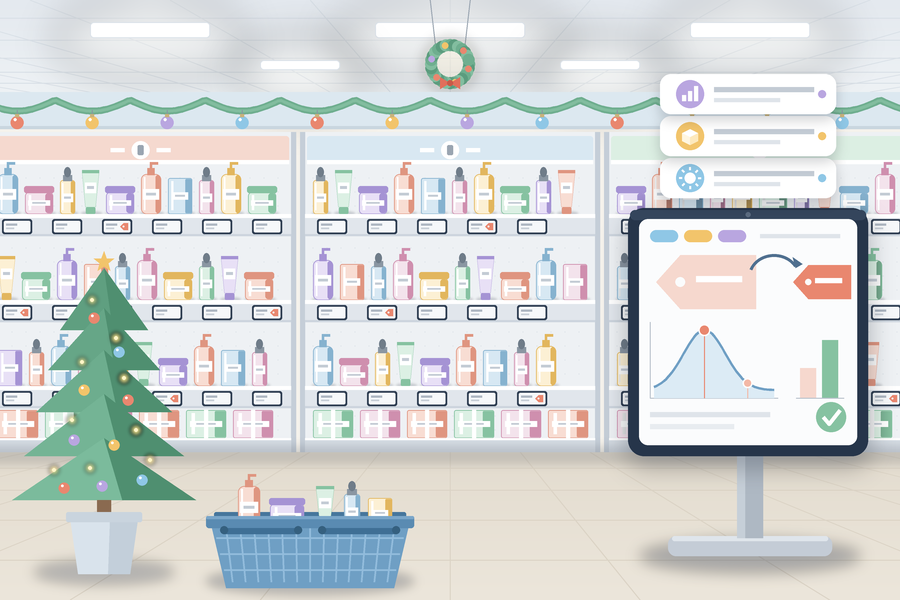
Shoppers heading into the biggest discount weekend of the American year may find the bargains a little thinner. Consumer brands in the United States are increasingly letting machine learning software decide how deep a markdown should go, how long it should run and which products deserve one at all. A global news agency reported on 23 November that one billion dollar beauty brand was advised to cut its planned discount on a skincare product from 40% to 30%. For retailers everywhere, the story is not about one weekend. It shows pricing moving from a calendar of fixed promotions to a system that tests, predicts and adjusts every discount against expected demand.
What happened
The report drew on interviews with five companies that sell AI pricing tools to brands and retailers. Their common message was that the software often concludes a brand can offer smaller discounts without losing demand. The chief executive of one software provider said its system generally shows that brands need fewer promotions, for less time, on fewer products.
A major US clothing retailer confirmed it uses that software to make markdown decisions based on demand and inventory signals. Another pricing platform suggested an unnamed brand reduce a buy one get one offer from half price on the second item to 40% off. The pricing firm behind the skincare advice declined to name its client. Its chief executive said shoppers will see fewer deep discounts as companies model demand more rigorously.
Luxury is moving too. A planning software company said an American jewellery house, an Italian fashion house and a French fashion house use its platform for pricing. Several of the brands named did not respond to requests for comment.
The timing matters. The largest US retail trade body expects holiday sales to rise 4.2% on last year to just over $1 trillion, with inflation running at 3.7%. Brands want to protect margins while shoppers are sensitive to every price rise.
From the sticker gun to the algorithm
For decades, holiday promotions were planned months ahead and applied broadly. A whole category might carry the same percentage off for the same days, with stickers or printed signs telling shoppers what had changed. Fresh food worked in a similar way. In 2019 a Dutch supermarket chain described its standard practice as a fixed 35% sticker placed on products due to expire the next day. Staff applied it at ten in the morning and the price stayed the same for the rest of the day.
Academic work showed early on that a model could do better. In 2017 researchers at a leading US technology university described a machine learning pricing method first used by a US online flash sale retailer. Its hardest task was pricing items the business had never sold before. The method matched each new product with similar past products, predicted how demand would respond to price, tested a price against real sales and then adjusted. Within six months the retailer’s revenue rose 10%, according to the researchers.
The same team tested the approach on a daily deals platform that launched thousands of offers a day. Revenue rose about 21% overall. For deals with fewer bookings than the median it rose 116%, and for busier deals it rose 14%. The researchers said a physical retailer applying the method to promotions and pricing across channels saw similar results.
What has changed since then is reach and precision. The companies selling these tools say the technology has become more sophisticated over the past two years at predicting demand at specific prices. Adoption is rising. A 2025 survey by a global pricing consultancy found a third of companies use AI pricing for demand forecasting and 28% use it for real time price optimisation.
How the technology works
The systems combine several streams of data. Sales history shows how a product has sold at different prices. Inventory levels show how much stock needs to move and how quickly. Competitor prices, weather and wider economic conditions add context. Machine learning models blend these signals to predict how demand will shift, and they update those predictions as new sales arrive.
The output is a recommendation for each product, store or channel. It might be the recommended retail price, the size of a markdown or the moment a promotion should start and stop. As in the early research, the best systems then compare real sales against the prediction and adjust the price curve for the next round.
One founder of a price optimisation platform said the software has the confidence to hold its nerve when a smaller discount will do. The skincare case shows the logic. The question is whether the extra ten points of discount would buy enough extra sales to pay for itself.
In physical stores the final step is getting the new price onto the shelf. Electronic shelf labels make that fast. In March 2026 a South Korean shelf label maker and a pricing software provider deepened a partnership that links AI price recommendations directly to digital labels across European retail networks. The integration lets recommendations reach store shelves automatically and consistently.
Where it is used around the world
Japan offers one of the clearest examples on the shop floor. Japanese convenience stores and supermarkets use AI that studies past sales to decide which perishable items to discount and by how much. In one Tokyo convenience store in the Shinjuku district, an in store computer makes the call around three in the afternoon. On one day it marked down a single assorted sandwich by ¥20 and three ham and lettuce sandwiches by ¥30 each. Of eight assorted sandwiches on the shelf, only the one closest to its use by time was reduced. A manager then printed the new tags.
In Europe, the Dutch chain trialled AI discounts on poultry and fish in one store in 2019. The algorithm weighed remaining shelf life, other promotions, store location, weather, historical sales and stock. Electronic labels showed both the regular price and the reduced price for a given expiry date. The discount could deepen during the day as the date approached, instead of staying fixed from the morning. The aim was to cut food waste.
In the United States the technology now spans the market. A large US general merchandise retailer has used its own machine learning software for inventory since about 2019. A sporting goods chain and an off price retailer have used weather forecasting AI for inventory planning for at least two years. Budget chains and luxury houses alike now use outside platforms to set prices and estimate how a change will affect sales.
What the technology offers
For brands, the main benefit is margin. A discount that a model shows to be deeper than demand requires is money given away. The research on flash sales and daily deals shows how large the revenue gains can be when prices follow measured demand instead of habit.
Better pricing also helps inventory. The clothing retailer that confirmed its use of the software ties markdowns to demand and inventory signals, so stock that needs to move gets the discount and stock that will sell anyway does not.
Data from sportswear suggests the shift is already visible. Over the past year the share of sportswear products on sale rose, but the average discount fell. The average discounted sports bra was 32% off, down from 36% a year earlier. Discounts are becoming more targeted rather than disappearing.
In fresh food the gains reach beyond profit. Dynamic markdowns that deepen as a product nears its date give shoppers a reason to buy it before it becomes waste. Both the Dutch trial and the Japanese stores were built around that goal.
The challenges
The first risk is the shopper. Customers have learned to expect deep holiday deals, and smaller discounts arrive at a time when the cost of living is a leading concern for American voters. The chief executive of the pricing firm that advised the skincare brand acknowledged the practice is controversial. Shoppers want discounts, he said, while retailers are getting smarter with AI. Smaller holiday discounts carry a real risk of a backlash from customers.
The second is transparency. One consultant who has built an AI pricing tool said the effects can be subtle and that, done well, shoppers will not notice. That is a commercial strength and a trust problem at the same time. A former management consultant and ecommerce executive described dynamic pricing as one layer removed from personalised pricing and said it raises legal and ethical questions.
That line matters to regulators. The predictive tools described typically stop short of setting prices for individual customers, and two of the largest US retailers say they do not do so. Several US states have moved to curb individual pricing. In 2025 New York added a requirement for businesses that use personal data to set different prices for different shoppers to tell customers that the price was set by an algorithm using their personal data. The largest US retail trade body challenged the rule in court.
The third challenge is measurement. Large scale data on how far AI has moved prices across the market is still limited, and most of the evidence comes from the companies selling the tools. Retailers adopting them need their own testing to know whether a shallower discount protected margin or simply lost the sale.
What it means for retailers and what comes next
The practical change is in how promotions are planned. A discount becomes a decision for each product, backed by a demand forecast, rather than a blanket percentage set months ahead. That favours retailers with clean sales and inventory data, fast price execution in stores and the discipline to test before they trust a recommendation.
It also changes the role of the merchant. People still set strategy, brand position and limits on how far prices can move. The model handles the arithmetic of thousands of items at once. Retailers that keep a clear line between demand based pricing and pricing based on personal data will be better placed as rules tighten.
The direction of travel is set by stated plans and rules already in motion. Pricing software firms say adoption is rising, and shelf label makers are wiring AI recommendations straight into European stores. Holiday sales in the United States are forecast to pass $1 trillion this year. Lawmakers in several states are drawing lines around how personal data may be used to set prices. Deep discounts are unlikely to vanish. What is changing is that each one now has to justify itself against a forecast, and the retailers that do this openly will keep the trust of the shoppers they depend on.
Sources
[1] The Star
[2] MIT News
[4] Cyprus Mail
[5] TechCrunch

You may also like

Dubai Plans Robot Couriers for the Last Lift Ride to Your Door
AI Now Decides What Fills the Shelves at a Major US Retailer