How Produce Recognition Technology Is Accelerating Self Checkout
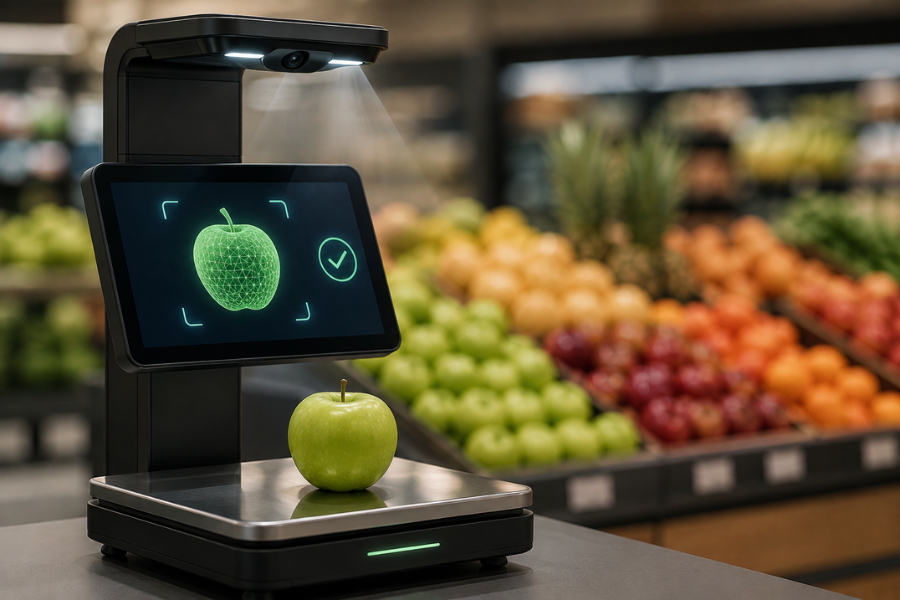
For decades, weighing fresh produce in a supermarket has been a small but persistent source of friction. Whether at a staffed checkout or a self-service kiosk, the process typically requires the shopper or cashier to identify the correct item from a long list of codes, a task that demands memorisation, patience or trial and error. In 2026, a growing number of retailers are deploying AI-powered smart scales that eliminate this step. By using computer vision to recognise fruits and vegetables by their shape and colour, these scales automatically identify the product, calculate the price and generate a barcode, all in seconds.
How the Technology Works
An AI recognition scale is an advanced retail weighing device equipped with a camera and artificial intelligence software that automatically identifies products placed on the scale. When a customer places an item on the scale, the built-in camera captures an image. Software analyses this image using computer vision and neural networks trained on extensive databases of produce images. The system then suggests the most likely matches on the display, often with a single click required to confirm.
The technology is designed to handle the natural variability of fresh produce. Unlike packaged goods with standard barcodes, fruits and vegetables vary in size, shape and colour from one item to the next. Modern AI vision systems continuously learn and can identify irregularly shaped fresh produce, visually similar items and even distinguish between different origins or varieties of the same product. Some systems are trained on over 100,000 images to achieve high recognition rates. Recognition accuracy can reach approximately 99 per cent, even for bagged items or visually similar fruits.
Deployment in Belgium
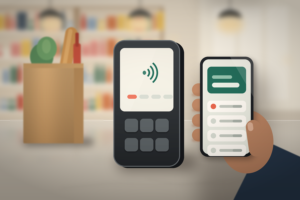
In August 2026, a major European discount retailer began rolling out a smartphone-based shopping system across its Belgian stores. The launch, which started in Melle and Destelbergen on 25 August, is part of a broader expansion of the technology, which is already available in Germany, the Netherlands and Luxembourg. The retailer plans to extend the service to approximately 30 Belgian stores equipped with self-checkout infrastructure by the end of the year.
A central component of the system is the integration of AI-powered scales in the fresh produce section. The scales automatically recognise fruits and vegetables by their shape and colour, eliminating the need for customers to search through lists or memorise product codes. The scales are complemented by proactive promotional alerts within the app; for example, if a customer scans three items while a “4+2 free” promotion is running, a notification prompts them to add an additional item to maximise savings.
To ease the transition, in-store advisors were made available during the first two weeks to assist first-time users. A one-time 5 percent discount is also offered to encourage initial adoption of the system. Traditional checkouts and self-checkout kiosks remain available, giving customers the choice of how they wish to shop.
A Global Trend
The Belgian rollout is part of a broader global trend. In Japan, a leading retailer introduced an AI scale for fresh produce at a store in Chiba Prefecture in March 2026. The scale uses an internal camera and AI-powered image diagnosis to automatically determine the type of product being weighed. Customers simply place the item on the scale, and the system displays the product information and generates a barcode label based on the weight. The store uses the scale for loose produce including tomatoes, carrots, snap peas and mushrooms.
In Germany, a major retail group developed its own in-house AI system which has been in use at its discount stores since mid-2021. The system recognises 75 different fruit and vegetable categories comprising 340 individual items at those stores. At its full-service supermarkets, a phased rollout of the system at self-checkouts began in January 2026, where it currently recognises 87 categories comprising 574 individual items. The system was trained on over 100,000 images.
In Ecuador, a retail group piloted an AI-powered produce recognition system across 27 locations in February 2026. The system accurately recognises over 700 unique produce codes. Stores participating in the pilot reported a 50 to 70 percent increase in self-checkout transactions.
In South Korea, an AI checkout solution was upgraded in July 2026 to recognise fresh produce including fruits, vegetables and even baked items, products without barcodes whose shapes vary from piece to piece. The system can recognise products in 0.4 seconds.
Benefits for Retailers and Shoppers
For shoppers, the primary benefit is convenience. The scales eliminate the need to search through lists, memorise codes or navigate complex menus. As one retailer’s spokesperson put it: “The customer scans his own items along the aisles before putting them directly into his bag. Another new feature is that weighing fruit and vegetables is made easier thanks to scales equipped with artificial intelligence. These automatically recognise the products thanks to their shape and colour. No need, therefore, to search for the right item in a list”.
The technology also helps overcome language barriers, particularly at self-checkouts where customers may not be familiar with the local language for produce names. In Japan, the technology supports the sale of “imperfect” vegetables, produce with irregular shapes or sizes that might otherwise go to waste by making it easy to weigh and price them.
For retailers, the benefits include faster checkout times, reduced labour costs and improved accuracy. By automating produce identification, the technology reduces the need for staff intervention and minimises pricing errors. Some systems can maintain up to 120 transactions per hour per station. The integration of smart scales with loyalty programmes and promotional systems also enables retailers to close the data loop, offering targeted promotions based on what customers are purchasing.
Challenges and Considerations
Despite the benefits, AI-powered produce scales face several challenges.
Accuracy. While recognition rates can be high, the technology is not infallible. Visually similar items, unusual shapes or poor lighting conditions can lead to misidentification. The systems are designed to suggest multiple possible matches, but errors can still occur.
Training and data requirements. The effectiveness of the system depends on the quality and breadth of the training data. Developing a robust recognition model requires thousands of images of each product in various conditions, different lighting, angles, ripeness levels and packaging types. Some systems have been trained on over 100,000 images, but continuous updating is needed as new products are introduced.
Integration complexity. Deploying AI scales requires integration with existing point-of-sale systems, inventory management and loyalty programmes. Retailers must ensure that the scales communicate seamlessly with these systems to avoid discrepancies.
Customer adoption. While the technology simplifies the process, some shoppers may be hesitant to use it, preferring traditional methods or requiring assistance during the transition. Retailers have addressed this by providing in-store advisors and maintaining traditional checkout options.
Cost. The hardware and software required for AI scales represent an investment that may not be feasible for all retailers, particularly smaller independent stores.
Privacy. Some AI scales use cameras that capture images of produce. While these images are typically used only for product identification and not retained, retailers must ensure compliance with data protection regulations and communicate clearly with customers about how the technology works.
Looking Ahead
The deployment of AI-powered smart scales in 2026 reflects a broader trend toward automation and computer vision in retail. As the technology continues to improve, it is likely to become a standard feature in supermarkets, eliminating one of the last remaining friction points in the checkout process.
The convergence of AI, automation and real-time data is turning stores into connected ecosystems where devices work together to streamline operations. Smart scales, self-checkout systems and loyalty programmes are increasingly integrated, enabling retailers to offer more personalised experiences while reducing costs and improving efficiency.
As one industry executive noted, the goal is to implement technology that empowers people rather than replacing them. By removing routine tasks from the checkout process, AI scales free up staff to focus on customer service and other high-value activities.
Sources:

You may also like
Why Every Online Order May Soon Get a Made to Measure Box
AI Agents Step Into the Store Manager’s Office