The Rise of Physical AI for the Workforce
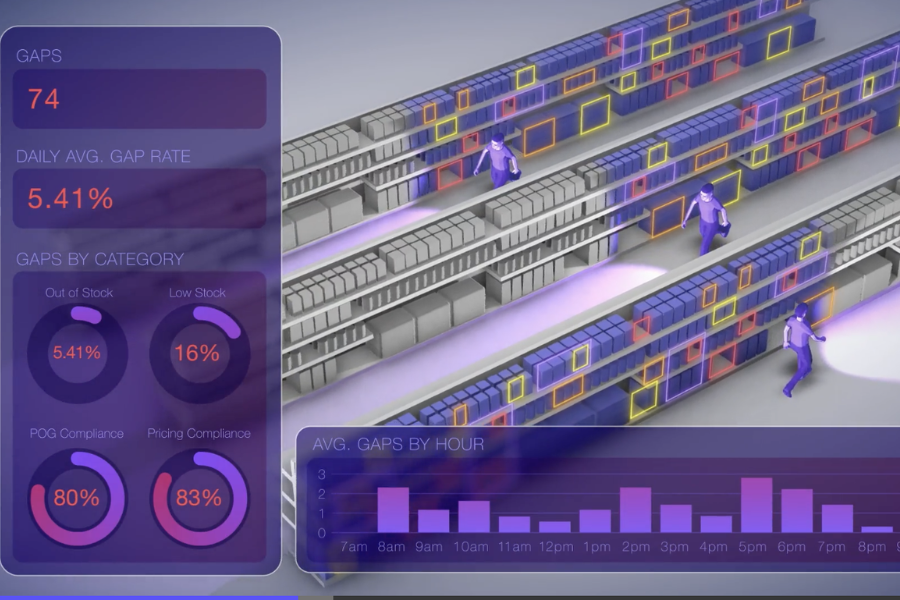
A new category of technology is emerging in retail: wearable cameras powered by artificial intelligence, worn by store employees to track shelves, map stores in real time and provide operational intelligence. These devices, sometimes called “physical AI” tools, are designed to augment human workers rather than replace them, capturing what the industry terms “egocentric data”, information collected from the point of view of the person wearing the device.
The technology has attracted significant investment and is being deployed across retail environments. However, its adoption raises important questions about privacy, workforce dynamics and the practical trade-offs between efficiency gains and potential downsides.
What Is Wearable AI in Retail?
Wearable AI devices for retail workers are lightweight camera systems that employees wear as they move through stores. The devices use computer vision, 3D mapping and spatial computing to track shelf inventory in real time, creating digital maps of store layouts and product locations. Unlike fixed security cameras, these devices move with the worker, capturing information from their perspective as they perform routine tasks.
The technology is designed to serve several functions:
Inventory tracking. The devices can scan shelves and identify which products are in stock, which are low and which are out of stock. This information is transmitted to store managers and inventory systems in real time, potentially reducing the need for manual inventory counts.
Spatial mapping. The devices create digital maps of store layouts, capturing the precise location of products, fixtures, and other physical elements. This information can be used for store planning, planogram compliance and operational analysis.
Workforce coordination. Some devices include communication features such as walkie-talkie capabilities, allowing workers to stay in contact while simultaneously collecting operational data.
Safety and security. Some wearable AI devices include panic buttons and video recording capabilities intended to enhance worker safety in environments where customer aggression or security incidents are concerns.
Potential Benefits
Proponents of wearable AI technology point to several potential benefits for retailers and workers.
Efficiency gains. Manual inventory management is time-consuming and labour-intensive. Proponents argue that wearable cameras can significantly reduce the time required to count inventory, map store layouts and identify out-of-stock items. In one documented deployment, an employee who typically needed two hours to manually map inventory across a location completed the process in less than 10 minutes using the wearable technology.
Reduced out-of-stock incidents. By providing real-time visibility into shelf inventory, the technology can help retailers identify gaps more quickly and replenish products faster. This can potentially reduce lost sales from out-of-stock items and improve customer satisfaction.
Labour optimisation. By automating routine inventory tasks, the technology can free workers to focus on higher-value activities such as customer service, merchandising and product consultation.
Worker safety. Some wearable AI devices include panic buttons and real-time video streaming that can provide situational awareness to remote security teams. The National Retail Federation reported that 73% of retailers report heightened aggression and violence from customers and visible safety technology may help deter incidents and provide evidence when they occur.
Cross-industry applicability. The technology is not limited to retail. It has been deployed in warehouses, factories, hospitals and maintenance environments, where workers must continuously locate objects, update information and coordinate activities.
Key Challenges and Concerns
Despite the potential benefits, the deployment of wearable AI cameras on retail workers raises significant concerns.
Privacy and Surveillance Risks
The most immediate concern is the impact on worker privacy. Wearable cameras capture continuous video of workers’ activities throughout their shifts. While the technology is ostensibly focused on inventory and store mapping, the potential for function creep, using the devices for employee monitoring, performance evaluation or disciplinary purposes, is a legitimate concern.
The technology captures “egocentric data”, information from the point of view of the person wearing the device. This data provides granular visibility into how each worker performs their tasks. Without clear guardrails, this information could be used to monitor, evaluate or discipline workers in ways that erode trust and create a culture of surveillance.
Industry observers have noted that the same data used for operational efficiency could, in practice, be repurposed for employee monitoring. The extent to which retailers will use the data for productivity tracking, performance evaluation or disciplinary purposes remains unclear.
Worker Resistance and Trust
The introduction of wearable cameras in retail environments has the potential to create friction between workers and management. Employees may view the devices as an invasion of privacy or a sign of distrust. Retail workers have historically been subject to significant surveillance and wearable cameras add a new dimension to this dynamic.
For the technology to be accepted, workers must trust that the data collected will not be used against them. This requires transparency about what data is collected, how it is used, who has access to it and what safeguards are in place.
Impact on Workforce Dynamics
The technology is designed to augment human workers, not replace them. However, the long-term impact on workforce dynamics is uncertain. If the technology enables retailers to operate with fewer workers or if it shifts the nature of retail work toward constant monitoring and data collection, the technology may have unintended consequences for employment and job quality.
One executive described the shift: “The tech that’s changing knowledge work is now starting to move into physical work through wearables and cameras at retail, which has the largest physical workforce and data problems.”
Technical Limitations
Wearable AI technology is not infallible. Computer vision systems can make errors, misidentify objects or fail in challenging lighting conditions. The accuracy of inventory tracking depends on the quality of the training data, the hardware capabilities of the device and the conditions in which it is used. Inaccurate data could lead to incorrect inventory decisions, out-of-stocks or overstocking.
A Broader Industry Movement
In June 2026, a technology company unveiled a wearable AI assistant designed for retail and other front-line enterprise teams, combining video security, two-way voice communications, a panic button and conversational AI into a single device.
The launch came as retail crime and front-line violence reached critical levels. The National Retail Foundation found that 73% of retailers report heightened aggression and violence from customers and 44% cite a lack of evidence as a key barrier to reporting theft to law enforcement. A representative from the Loss Prevention Research Council noted that “visible safety technology makes a real difference” and that the best solutions “discourage dangerous behaviour before it starts, support employees when tensions rise and preserve a clear record when incidents do occur.”
In June 2026, another company launched a wearable camera system for gig workers, designed to collect real-world data for training machines. The system records workers performing tasks to help train robots and AI systems.
The Concept of “Physical AI”
Industry observers have begun using the term “physical AI” to describe this category of technology. The concept is based on the idea that AI systems need to understand not just data but the physical world, the relationships among people, objects and three-dimensional space in real time. This “egocentric” perspective, captured from the worker’s point of view, is seen as essential for creating useful AI assistants for physical workers.
One executive described it as follows: “The tech that’s changing knowledge work is now starting to move into physical work through wearables and cameras at retail, which has the largest physical workforce and data problems.”
However, the term “physical AI” itself suggests a perspective that some might question. The technology does not create physical intelligence; it collects data about physical environments. The intelligence lies in the algorithms that process the data, not in the devices themselves.
Looking Ahead
The companies developing wearable AI for retail workers are expanding aggressively. A startup which raised $21 million in July 2026 plans to use the capital to expand its global enterprise footprint, invest in its core AI models and scale its engineering team.
The technology’s expansion beyond retail into manufacturing, automotive, logistics and healthcare suggests that the model of using wearable cameras to capture egocentric data and provide real-time intelligence may have applications far beyond store shelves. As one executive put it: “Building an AI assistant that works seamlessly in dynamic, messy, real-world environments is incredibly challenging. But that’s where the highest value lies.”
However, the long-term implications for retail workers and the industry remain uncertain. The balance between operational efficiency and worker privacy, the potential for surveillance culture, the impact on employment and the effectiveness of the technology in practice will all shape the trajectory of wearable AI in retail.
Sources:

You may also like
Digital Identity Goes Live at the Checkout

The Identity Infrastructure Behind AI Shopping