Walgreens and FedEx to take part in drone program
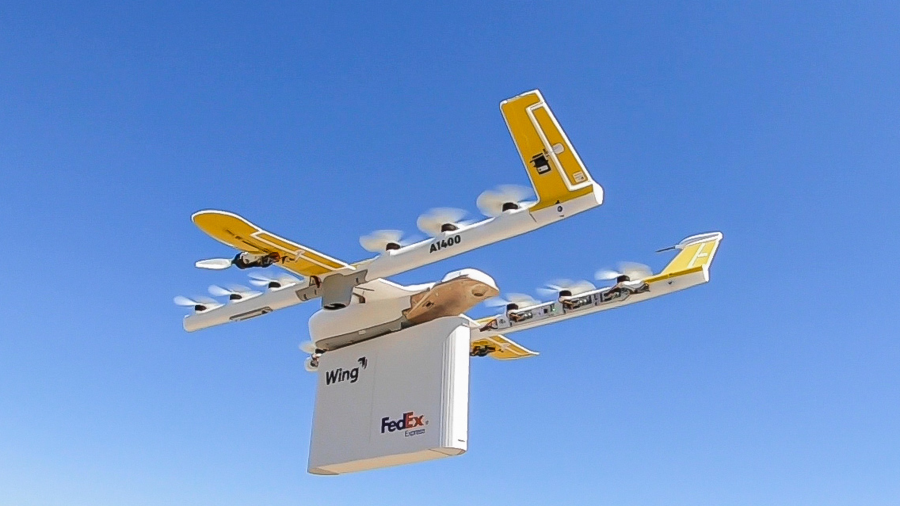
Google sister company Wing announced today that it would be partnering with FedEx and the drugstore chain Walgreens to bring autonomous drone deliveries to the US in October.
The pilot program will be launched in Christiansburg, Virginia, one of the two areas in the state that Wing has been testing its drone technology for years. In April, Wing was certified by the US Federal Aviation Administration (FAA) to become what it says was the first company in the country to be able to offer autonomous drone deliveries. Wing has completed over 80,000 test flights and thousands of deliveries at its facilities in Australia and the US.
People expecting packages from FedEx will be able to choose to get their deliveries made via drone, assuming that they live in certain areas that Wing has designated it can safely deliver parcels in. Similarly, Walgreens customers will be able to order products, such as non-prescription medicine, and have them delivered by drone. Walgreens said in a release that 78% of the US population lives within 5 miles of one of its stores. Wing said that its drones can currently make a round-trip flight of about 6 miles (9.7 km), traveling about 60 miles per hour (97 km per hour), and can carry around 3 lbs (1.4 kg) of payload. The company also said that it would be offering deliveries from a local Virginia retailer, Sugar Magnolia. Wing won’t be charging for the delivery service itself during the trial.
Wing said on a call with journalists that it will soon be reaching out to members of the Christiansburg community to let them know if they will be able to accept deliveries. Wing’s drones don’t actually land on the ground when they make deliveries; instead, they hover about 23 ft (7 m) off the ground, lowering their packages down through a winch cable system. If anything happens to snag the cable as it’s delivering a package, the drone can sense the tension in the cord and release it, hopefully flying away without incident. It still requires what it calls safe delivery zones, like a backyard or a front pathway outside a house, to be able to make a delivery.
Drone deliveries have long been a subject of research, conjuring up images of a customer sitting on their couch, tapping a few buttons, and having a new outfit or dinner delivered to their door in a matter of minutes. Wing, first as part of Google’s X “moonshot factory,” has been trying to turn this fantasy into a reality since 2012, and Amazon has been quite public with its desire to do similarly since 2013.
But even with relaxed regulations under the Trump administration spurring myriad autonomous drone test programs launched across the US, regular drone deliveries still remain a pipe dream. Wing’s new service, launching in a very small area that its team knows well, requires a large space of land to drop a package safely to customers. Unless you happen to have a yard, it doesn’t seem likely that current technology is going to be able to provide a solution to make what the industry calls “last-mile” deliveries to end consumers a reality.
For some types of deliveries, however, autonomous drone deliveries could be life-changing. The work that Zipline is doing in Africa, for example, sending critical medical supplies to remote clinics, has proved invaluable. Drones can reach places that most other methods of delivery can’t easily, and it’s easy to see why Google would choose a location near the difficult-to-cover Appalachian Mountains.
But for now, while the company says it’s the largest pilot program launched under the new Trump administration regulations, Wing’s work remains a relatively small trial in a specific part of the country. If the test goes well, Wing said it would like to offer deliveries across the US in the future.
Source: qz.com

You may also like
Why Every Online Order May Soon Get a Made to Measure Box

AI Agents Step Into the Store Manager’s Office