Dubai Plans Robot Couriers for the Last Lift Ride to Your Door
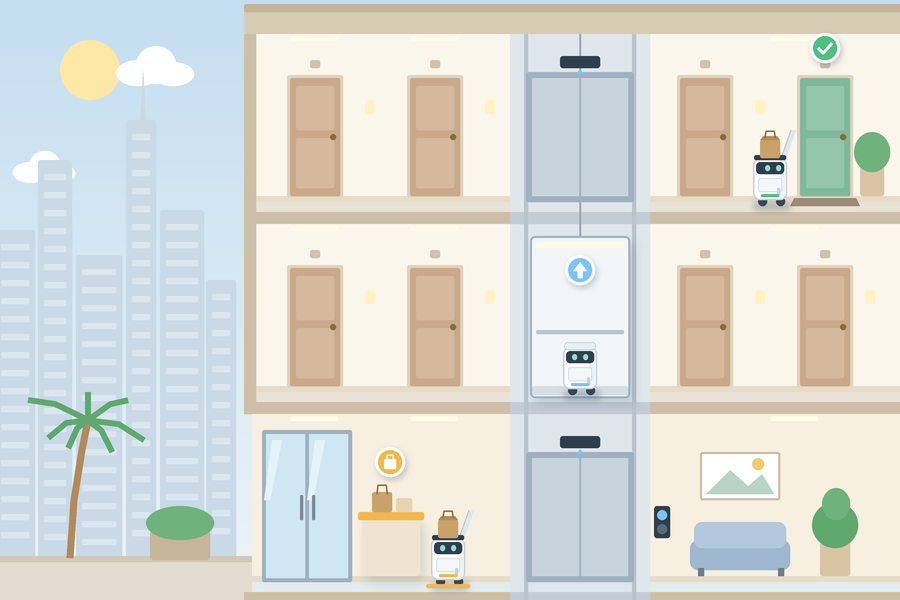
In Dubai the hardest part of a food or parcel delivery is often not the road. It is the lobby, the security desk and the wait for a lift in a residential tower. The city now wants robots to take over that stretch. Eight delivery companies have signed up to a shared programme in which riders hand orders to indoor robots at the entrance and the robots carry them up to the customer’s door. The first wave aims to equip 100 buildings by 2029. For retailers everywhere it is an early test of whether the last few metres of delivery can be automated as a shared city service rather than one brand at a time.
What Dubai announced
The plan was unveiled during the city’s annual future week, a four day gathering at its futurist museum that opened on 18 November. A local future foundation runs the programme through its robotics lab. It was announced after the lab signed an agreement with eight partners that normally compete for the same orders: food and grocery apps, an online marketplace, a ride hailing platform and parcel couriers.
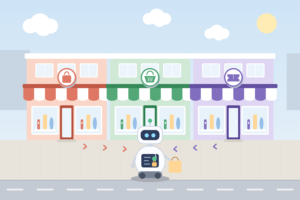
The model is simple. A human courier still rides from the restaurant, store or warehouse to the building. There the order passes to a specialised robot that travels through the building and delivers food, groceries, parcels and other goods to the customer’s door. The 100 buildings have not yet been named. The foundation describes the first wave as the groundwork for a citywide network of robot ready buildings.
The programme sits within a wider robotics and automation strategy the emirate launched in September 2022. During the week wheeled delivery robots moved between the stands, and one food delivery platform showed the drones it is piloting for deliveries.
From the lobby queue to the robot handover
Until now the final stretch of an urban delivery has been done by hand. A rider parks, signs in at a security desk, waits for a lift and walks a corridor before handing over a bag. Partners in the Dubai programme say the aim is to cut the time couriers spend in lobbies and lifts. A marketplace executive said robots could ease delays at security desks and keep deliveries moving at peak times.
Dubai has tested parts of this before, on a much smaller scale. In July 2024 the same robotics lab ran a trial with three robots serving restaurants and shops in a sustainable housing community, promising deliveries in under 30 minutes. A food delivery platform has since tested handovers from lobby to floor in residential towers without launching a consumer service. What has changed is scale and structure. Instead of one company negotiating building by building, eight delivery firms are joining a single programme backed by the city.
Outdoor robots are also growing in the region. A robot delivery operator in the Emirates plans to expand from 10 robots to 100 across the country. It says permits from property developers limit how fast it can grow, which is exactly the barrier a shared indoor programme is meant to address.
How a robot rides the lift
The technical heart of indoor delivery is the lift. A robot that can cross a lobby but cannot change floors is of little use in a tower. Two approaches have emerged. In the first the building’s lift system is connected to the robot through software, so the robot can call a car and choose a floor without touching anything. In the second the robot presses the buttons itself.
South Korea offers clear examples of the connected approach. A major Korean lift maker unveiled an open software interface in March 2022 that links robots and smart devices to its lifts. It has accounts with more than 60 robot makers on that platform, and more than 40 delivery robots use its cloud connection in healthcare, hospitality and finance.
The button pressing approach targets older buildings. A California robotics startup says most lifts in North American residential towers, hotels and hospitals offer no external connection for robots. It says its delivery robot uses cameras to find buttons and a small mechanical arm to press them, with every decision made on the robot because lift shafts often block network signals. It says it needs no changes to the building.
Where robots already ride the lifts
Seoul offers a long running example in a busy commercial district. A Korean food delivery app began an indoor robot service in October 2022 between a large convention mall and a 55 floor office tower, as part of a robot street project with the city and district governments. By March 2024 it had completed more than 5,000 orders. Its robot links to the lift system, calls a car heading in its direction and selects the floor itself. In buildings with several lifts it boards the first car to arrive and waits for the next one if the cabin is crowded.
Other Korean robot makers sell machines that work with most major lift brands, and they have been piloted in company headquarters and offices. The Korean lift maker has been signing deals with construction firms and robot makers to extend robot delivery from apartment community centres to individual homes.
In the United States the focus is on buildings without connected lifts. The California startup says it has completed demonstrations in some of San Francisco’s tallest residential buildings and has pilot agreements with condominium complexes and hotels.
What the robots offer and what stands in the way
The case for indoor robots rests on time and density. A rider who hands an order over at the entrance can be back on the road within minutes rather than lost in a tower. Platforms say this matters most at peak times. For residents the order arrives at the door without a rider in the corridor.
A shared programme also changes the economics. If eight rival platforms can hand orders to the same robots in the same building, each machine can stay busy through the day. A single brand on its own would struggle to keep a fleet occupied in one tower.
The obstacles are just as concrete. Every building needs lifts that robots can use, doors that open for them and space at the entrance for handovers and charging. Older lifts without a software connection require either an upgrade or a robot that presses buttons reliably. Robots share narrow corridors and crowded cabins with residents, and their behaviour there decides whether people accept them. Developers and owners must agree to host the machines, which is the bottleneck operators already report. The handover itself adds a step, and every extra step is a place where an order can be delayed or lost.
What it means for retailers
For grocers, restaurants and online sellers the lobby is where delivery promises are often broken. Quick commerce depends on minutes, and in tower districts many of those minutes are lost after the rider arrives. A working indoor handover would make fast delivery more dependable in exactly the dense neighbourhoods where order volumes are highest.
The shared model also matters. Retailers rarely control the buildings their customers live in. A citywide standard that lets any courier hand off to any compliant robot is closer to shared infrastructure, like parcel lockers, than to a private fleet. Retailers who sell through delivery platforms may gain faster drops without owning a single robot, while those running their own delivery will need to plug into the same building systems.
The road to 100 buildings
The stated timetable is 100 equipped buildings by 2029, with the first wave meant to set a model that can be repeated across the city. In parallel the regional robot operator plans to grow its fleet tenfold, and the Korean lift maker is pushing robot access from shared spaces into homes.
What makes the Dubai plan worth watching is less the robots than the agreement behind them. Competing delivery firms have accepted that the final lift ride is a shared problem. If they can solve it together in a city of towers, the robot waiting in the lobby may become as ordinary as the parcel locker.
Sources
[2] Gulf News
[4] tbreak
[5] HiDubai Focus
[6] Elevator World
[7] Robotics 24/7

You may also like
AI Now Decides What Fills the Shelves at a Major US Retailer
Germany Switches Off Camera Checkout as Dubai Switches It On