Personal AI Agents That Shop for You Reach Latin America
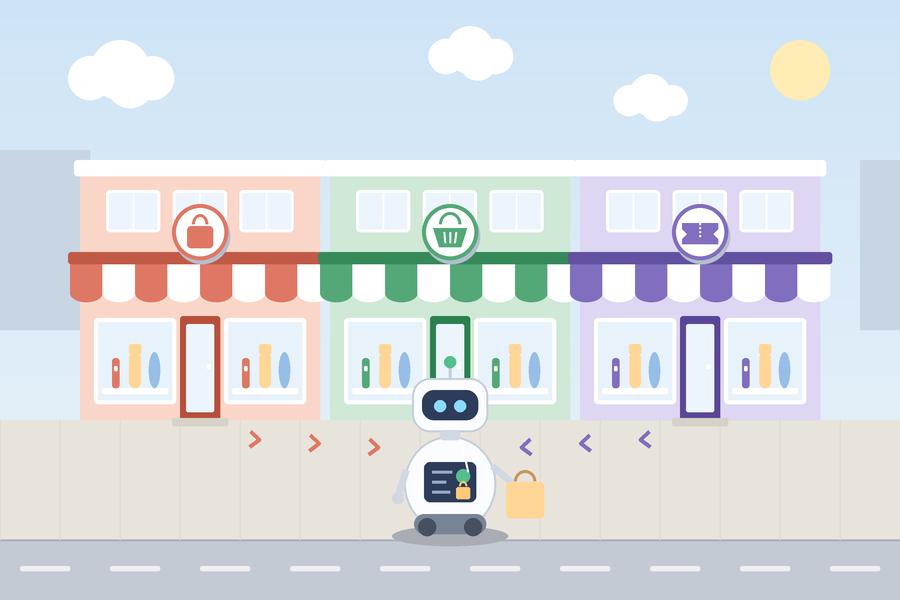
In the first week of November, shoppers in Mexico gained something new on their phones: a personal AI agent that can be told what they want and then go and get it. A major US social media company switched on its agent in Mexico on 5 November, its first market in Latin America. The agent works in Spanish. It can search a department store’s range, compare options and prepare a purchase while the shopper gets on with the day. Four days later a UK business news site reported that the same agent is expected in Britain within weeks. A day after that, the maker of a leading AI chatbot let US online sellers build their own agents inside its assistant. For retailers everywhere the pattern is now clear. A growing share of shopping journeys will begin with software acting for the customer, and stores will have to decide how to meet it.
An agent arrives in Mexico
The Mexican launch came with a list of local services already wired in. According to an English language news site in Mexico, the connectors at launch cover retail, credit and lending, travel, car rental, entertainment and food delivery. They include two large Mexican department store and retail chains, a cinema chain, an online travel agency, a used car platform and a delivery app. A Mexican business publication reported that the agent is free for basic use, with optional paid subscriptions for heavier use, and is open to adults aged 18 and over on iPhone, Android and the web. Not every connector works from day one. Partners are being switched on gradually and users can see which are active in the app’s settings.
One of the department store groups explained what it is testing. A Latin American retail trade publication reported that the chain joined so that shoppers can describe what they need in a conversation and receive product recommendations, rather than browsing by category. The same report said a major supermarket group is also part of the agent’s network in Mexico. The store’s digital marketing director described the move as a way of exploring new routes to bring its range closer to consumers. The features on offer depend on each connected service, so not every retailer offers every function.
From search box to delegated errand
For most of the history of online retail the shopper did the work. A customer typed a query into a search box, opened several tabs, compared prices and delivery dates, then typed in card details at each checkout. Chatbots arrived on retail sites to answer questions about returns or opening hours. The first wave of general AI assistants went further and could recommend products, but the customer still had to click through and complete the purchase.
What has changed in 2026 is delegation. The new agents accept a goal rather than a query. The company’s country manager in Mexico said the agent works out how to reach the goal, builds a plan and carries it out, with the user authorising every action before it happens. When the company announced the agent for the US and Canada on 8 September, a European technology publication reported that it can fill in forms, negotiate and pay with the user’s card. It keeps working after the app is closed and remembers preferences across sessions. Payment no longer means handing a card number to a bot. A payments publication reported that the agent completes purchases through a payments provider’s checkout, which generates a single use card for each transaction so the user’s real card details are never exposed.
How the agent works
The design is built around separation. Each user gets an isolated virtual machine in the cloud that holds the agent and that person’s data, so one user’s agent cannot reach another’s. Inside that machine the agent runs its own web browser. This lets it visit retail sites and connected services much as a person would, then return with options.
A second layer sits between the agent and the internet. The same publication reported that this supervising system separates read access from write access and grants permissions for limited periods. It lets low risk tasks proceed and stops to ask before consequential actions such as a purchase. The agent cannot see passwords or card details and every action leaves an audit trail. A Japanese technology news site described the same flow from the user’s side. The agent keeps working on a long task in the background and sends a notification when it needs approval, for example before it sends an email or completes a purchase.
Merchants can meet the agent in two ways. Some are formal connectors, where a retailer or service links its catalogue and booking systems directly so the agent can search and buy through it. Others are simply websites the agent browses. The chatbot maker’s new tools take a third path. A US payments and commerce publication reported that US ecommerce and online service businesses can now claim a verified profile, supply product feeds with prices and availability, and launch their own agent. A shopper who sees a business in a chatbot answer can open its profile and start a separate conversation with that business’s agent to compare products.
Where the agents are spreading
The rollout has moved quickly across very different markets. North America came first in September. Japan followed on 23 October, its first market outside North America, according to the Japanese technology site, with email, calendar and photo sharing connectors live and local services for secondhand selling, household finance and event tickets planned. Singapore went live in late October as the first Southeast Asian market. A social media trade publication reported that local connectors there include two large online marketplaces, a ride hailing and delivery app that also handles groceries, a cashback platform and several travel services. Mexico followed in November and a UK launch is expected within weeks.
China is moving on a parallel track. A Chinese technology news site reported on 12 November that a Chinese technology group behind a popular short video app plans to introduce a similar assistant in the coming weeks, adding to its existing chatbot. In the US the chatbot maker’s business agents are limited for now to eligible ecommerce and online service businesses, with more markets and categories planned.
Each market is meeting the agents on different terms. In Singapore and Mexico large local retailers and marketplaces signed up as launch partners. In the US the reaction has been mixed. The UK picture includes banks and the data regulator as well as retailers.
Gains and frictions
Adoption has been rapid. The social media trade publication reported that the app passed 10 million downloads in its first month. On a quarterly earnings call the company’s chief executive said shopping is its most common use. More than a quarter of users ask for help finding deals and making purchases and the average purchase is above $200. For shoppers the gain is time. One instruction can replace a dozen open tabs, and the agent can compare prices and options while its owner does something else. For retailers that join as connectors the gain is presence inside a new front door, with a structured feed that lets the agent show accurate prices, stock and delivery options. Price comparison and order tracking are among the functions the Mexican trade report listed.
The frictions are just as real. On 20 September a major US online retailer began blocking the agent from its site. A Malaysian newspaper reported that shoppers using it there saw pop ups saying this breached the retailer’s terms of use. The retailer said third party agents should respect each retailer’s choice on whether to take part. In Britain, a UK business news site reported that the largest banks are blocking AI agents from customer accounts and that the data protection regulator has opened a call for evidence on agentic AI. Shoppers remain cautious too. A US business magazine cited a survey in which 31% of respondents would let an AI agent handle their shopping and 72% were unwilling to share card details. Only 2% said AI consistently understood their personal style. A Mexican news report warned that giving an agent wider access means sharing more personal data, and that data once shared cannot be taken back.
What it means for retailers
The first decision is whether to let agents in, and on what terms. Connecting formally gives a retailer some control over how its products, prices and promotions appear. Blocking protects the direct relationship and the data that comes with it, but risks being absent when a customer hands the errand to software. Many retailers will sit somewhere in between, allowing agents to read their catalogue while keeping checkout on their own systems.
The second is product data. An agent compares what it can read. Accurate prices, stock levels, sizes, delivery times and return terms in a structured feed matter more when the first reader is a machine. The chatbot maker’s business tools reward exactly this by asking for product feeds with live pricing and availability.
The third is trust and identity. Retailers need to know when a visitor is an agent, whom it represents and whether its owner has approved the purchase. Payment designs that issue a single use card per transaction and supervising systems that pause for approval answer part of that. Fraud teams, customer service and returns policies will need clear rules for orders placed by software.
The road ahead for delegated shopping
The near term timetable is already set. The UK launch is expected within weeks. The company plans to add support for AI glasses. The Chinese group’s assistant is due in the coming weeks and the chatbot maker plans to extend business agents beyond the US. The open contest is no longer whether shoppers will delegate errands to software. It is about which retailers the agents are allowed to reach and on whose terms. Retailers that treat the agent as a new kind of customer, one that reads data rather than banners, will be better placed to decide that contest for themselves.
Sources
[1] Expansión
[2] Resultsense
[3] PYMNTS
[5] IT Sitio
[6] Just Retail
[7] The Next Web
[8] The Paypers
[9] smhn.info
[10] Social Media Today
[11] TechNode
[12] The Star
[13] Fortune

You may also like
Sweden’s Grocers Now Get a Climate Score for 120,000 Foods Every Week
Smart Glasses Move Into the Last Few Metres of Parcel Delivery