Light-Up Digital Shelf Labels for Shopper Navigation
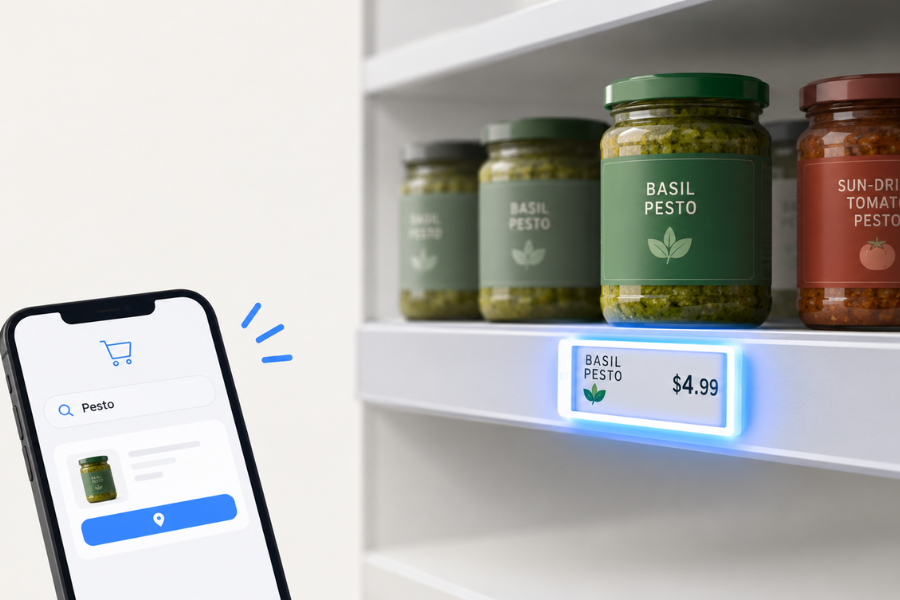
For decades, the paper price tag has been a fixture of the grocery shopping experience: static, silent and offering no help to a shopper struggling to locate a specific item on a crowded shelf. In 2026, that is beginning to change. Retailers in the United States and Europe are deploying digital shelf labels equipped with LED lights that can be triggered remotely through a smartphone app, causing the label of a sought-after product to flash and guide the shopper directly to it.
The technology represents a shift in the function of the shelf edge: from a passive display of pricing information to an active tool for in-store navigation, operational efficiency and customer engagement.
How the Technology Works
The system relies on digital shelf labels, electronic replacements for paper price tags that can display pricing and product information and be updated remotely. The labels used for navigation include a small built-in LED light. When a customer searches for a product in the retailer’s mobile app and activates the locator function, the request is transmitted to the store system, which identifies the product’s shelf location and triggers the corresponding LED to flash.
The process is designed to be simple for the shopper. In one implementation, the customer opens the retailer’s app, searches for the item, navigates to the indicated aisle and taps a button. A small LED on the shelf label of that product then flashes, allowing the shopper to spot it without scanning shelf after shelf. As one retailer described it: “Instead of scanning shelf after shelf looking for one small jar, the light can help point the way”.
The same LED infrastructure supports two other operational functions in addition to shopper navigation.
Pick to Light is used by store associates fulfilling online pickup or delivery orders. When an associate is gathering items for a digital order, the shelf label of the required product lights up, guiding them to the exact item, particularly useful when products look nearly identical, such as different flavours, sizes or varieties of the same brand.
Stock to Light assists associates in restocking shelves. Using a mobile device, an associate can activate the LED on a shelf label to identify where a product belongs, reducing the time spent double-checking locations during replenishment.
All three functions use the same LED lights already built into the digital shelf labels, meaning no additional hardware is required for the navigation feature beyond the labels themselves.
Deployment in Practice
- United States
In October 2026, a major U.S. retailer announced the wide rollout of the feature following a pilot programme, confirming that the capability would reach stores companywide by the holiday season. The feature had already recorded 5 million flashes from customers since it began rolling out to limited locations during the summer of 2026.
The retailer had more than 4,300 stores equipped with digital shelf labels at the time of the announcement and expected them to be installed across the chain by the end of 2026. The company framed the technology within a broader strategy described as “people-led, tech-powered,” with a senior executive stating that the aim was to use technology to “help associates do their job and free up time to allow them to invest in what they love to do most, which is spend more time with customers”.
- United Kingdom
A major UK supermarket group announced in September 2026 that it was developing a similar feature for its own mobile app, describing it as its version of “Shop to Light”. The retailer stated it was “currently in the process of developing our version of Shop to Light through the Product Finder app, where our customers will be able to come in in a few weeks’ time and flash a label”.
The UK retailer had already partnered with a digital shelf label provider to roll out electronic shelf labels across all 497 of its supermarkets, the first large UK supermarket group to adopt the technology across its entire estate, with 10.8 million smart electronic shelf labels to be installed. The retailer had previously implemented “Pick to Light” functionality for its online picking teams, using flashing lights on the digital labels to guide staff to the correct items.
The UK deployment is notable for its scale: the retailer is installing digital shelf labels across its entire supermarket estate and the navigation feature will be integrated with its existing app infrastructure and loyalty card programme, with “More Card savings and offers [to be] instantly communicated to customers at the shelf edge”.
Digital Shelf Labels and the Pricing Debate
The rollout of light-up navigation features is occurring amid a broader and more contentious debate about the role of digital shelf labels in retail pricing.
Digital shelf labels allow retailers to update prices remotely and instantly, eliminating the need for staff to manually replace paper tags. Retailers argue this ensures that shelf prices match checkout prices and improves operational efficiency. However, the technology has drawn scrutiny from lawmakers and labour groups concerned that it could facilitate “surveillance pricing” or dynamic pricing, the practice of raising prices during periods of high demand or based on individual customer data.
In October 2026, a new state law took effect barring retailers from using digital shelf labels to change the price of food items throughout the day and prohibiting the use of private customer data to set prices. A major U.S. city had previously become the first to bar retailers from using personal data to change prices on groceries and other essentials. Similar measures passed in other states and at least one state included a one-year moratorium on installing digital shelf labels.
In response to these concerns, the U.S. retailer deploying the navigation feature issued a statement clarifying that its digital shelf labels “do not independently determine or change prices,” that approved price changes are typically made outside of shopping hours, and that the retailer does not use surveillance pricing. The company stated: “The technology helps improve efficiency and lower costs, not personalise prices”.
The navigation feature itself does not change the price of an item when activated.
Documented Benefits
For shoppers, the primary benefit is time savings and reduced frustration. Locating a specific product among tens of thousands of items in a large store can be a significant source of friction, particularly for items that look similar to many others on the same shelf, spices, for example or different varieties of the same brand. The light-up feature provides a direct visual cue that eliminates the need for prolonged shelf scanning.
For store associates, the same LED infrastructure supports stocking and order-picking tasks. The “Stock to Light” function helps associates place products in the correct location, while “Pick to Light” helps them find items for online orders more quickly and accurately. These functions address a common operational challenge: products that look nearly identical but differ in flavour, size, or variety.
For retailers, the technology offers a way to improve the in-store experience without adding significant hardware costs, since the LED lights are already built into the digital shelf labels. The navigation feature also generates engagement data, the 5 million flashes recorded by one U.S. retailer represent 5 million instances in which a customer used the app to locate a product, providing insight into shopper behaviour and app usage patterns.
Challenges and Considerations
Consumer adoption and app usage. The feature requires customers to use the retailer’s mobile app to search for products and activate the light. Shoppers who do not use the app or who are not aware of the feature, will not benefit from it. The effectiveness of the technology therefore depends on app adoption rates and customer awareness.
Digital divide. Older shoppers, those without smartphones or those less comfortable with mobile technology may be unable to use the feature. This could create a disparity in the shopping experience, where tech-savvy customers receive guided navigation while others must rely on traditional methods such as asking staff for assistance.
Infrastructure and maintenance. While the LED lights are integrated into the digital shelf labels, the system requires a functioning network of digital labels, a reliable in-store wireless infrastructure and an app platform capable of communicating with the store system. Maintaining this infrastructure across thousands of stores involves ongoing operational cost and technical support.
The pricing controversy. As noted above, the broader deployment of digital shelf labels has become entangled in debates about dynamic pricing and surveillance. While the navigation feature itself is distinct from pricing functions, public perception of digital shelf labels may be affected by concerns about how the technology is used. Retailers deploying navigation features have felt the need to issue clarifications that the labels do not change prices automatically and do not collect customer information.
Limited independent verification of impact. While the U.S. retailer reported 5 million flashes from customers, no independent data has been published on whether the feature measurably reduces time spent searching for products, increases customer satisfaction or affects purchasing behaviour. The feature is described as a “big win” for time savings by the deploying company, but this claim has not been externally validated.
Conclusion
Light-up digital shelf labels represent a practical application of in-store technology that addresses a common and persistent shopper frustration: finding a specific product in a large store. By leveraging LED lights already built into digital shelf labels, retailers can offer guided navigation through their mobile apps without significant additional hardware investment.
The technology is being deployed at scale in the United States and is being developed for rollout across a major UK supermarket estate. It sits alongside companion features, “Pick to Light” and “Stock to Light”, that use the same infrastructure to improve operational efficiency for store associates.
However, the broader context of digital shelf labels includes ongoing debate about pricing practices, and the navigation feature’s success will depend on app adoption, customer awareness and whether the technology delivers measurable improvements to the shopping experience.
Sources: