AI Shopping Assistants Break Language Barriers in Physical Stores
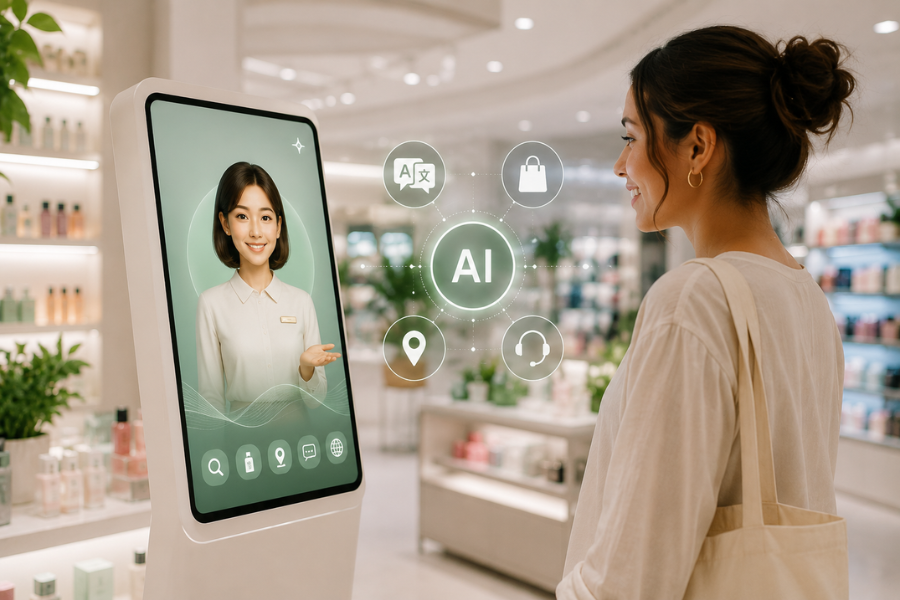
In July 2026, a major health and beauty retailer introduced artificial intelligence-based in-store services aimed at foreign customers, including an AI shopping assistant and an AI interpretation service. The move reflects a broader industry trend: using AI to address language barriers that have long been a friction point for international shoppers. However, as with any emerging technology, the deployment comes with both clear benefits and significant limitations that merit examination.
The Challenge That Prompted the Deployment
For retailers in tourist-heavy locations, language barriers present an operational challenge. An internal survey of store staff conducted ahead of the July 2026 rollout found that approximately 69.4 per cent of employees reported facing language barriers when serving customers and 54.8 per cent said interpretation support was necessary.
These figures reflect a persistent problem: as international tourism grows, retailers must find ways to serve customers who speak different languages without requiring multilingual staff at every location. The July 2026 deployment was introduced sequentially, starting with stores that have a high share of foreign visitors.
The Services Deployed
The retailer introduced two distinct AI-powered services.
The AI shopping assistant operates through self-service kiosks where customers interact with an AI avatar in real time. In eight languages, a single device provides product descriptions, stock checks, in-store location guidance and product recommendations tailored to individual skin characteristics. The service is designed to let customers browse products without language barriers. It primarily targets foreign shoppers in their 20s and 30s.
The AI interpretation service supports one-on-one consultations with store staff. The service adds AI technology to a portable translator introduced in 2024 and expands language support to 38 languages. Customers can scan a QR code shown by staff to join a real-time chat or use a tablet microphone installed in the store for voice conversations. The service is trained on data specialised for the beauty shopping environment to accurately convey technical terms.
Enhanced Customer Experience
The primary benefit is the removal of language barriers throughout the shopping process. Customers can access product information, check inventory, locate products and receive personalised recommendations without needing assistance from store staff. For one-on-one consultations, the interpretation service allows customers to describe skin concerns in their native language while staff provide detailed guidance on ingredients and product usage.
The assistant is built on a real-time conversational AI avatar platform and has been tailored specifically for the beauty retail market. For product recommendations, the AI recommendation engine was paired with tens of thousands of product listings to match customers by skin concerns, texture preference and intended use.
Improved Store Operating Efficiency
Beyond the customer experience, the AI shopping assistant helps improve store operating efficiency. Frequently asked information, such as payment methods or value-added tax refunds, can be checked on a touchscreen, allowing staff to focus more on specialised consultations rather than repetitive administrative tasks.
The system also provides a data-based dashboard that shows customers’ dwell time and major questions. This enables store operations to be adjusted according to customer demand and characteristics, based on analytical results. As one technology executive noted, the technology allows retailers to “resolve the language barrier issues that global retail stores face with overseas customers, while also contributing to improved store performance”.
Targeted Rollout Based on Demand
The services were introduced first at multi-level stores with a high share of foreign visitors, where demand for shopping information is strongest. This phased approach allows the retailer to test and refine the technology before considering nationwide expansion.
The services were introduced only at three stores in Seoul as of July 2026. The technology provider stated it could not yet disclose any further expansion plans, citing confidentiality. While the retailer has indicated plans to eventually expand services nationwide, the current deployment remains limited in scope.
Technology Is Not Infallible
AI language tools, including interpretation services, are not immune to errors. Industry examples from 2026 illustrate this point. In one documented case, an AI shopping assistant from a major retailer began “rambling about its ‘mother'” and mistaking the price of basic items. As one analysis noted, “AI assistants may feel confident and conversational, but they are still tools, not authorities”. These models do not “know” things the way humans do; they use statistical analysis to generate language that sounds plausible.
While the interpretation service in this deployment is trained on beauty-industry data, the risk of mistranslations or misinterpretations remains. Technical terms in skincare and cosmetics can be nuanced and AI may not always capture the intended meaning accurately.
Both services are designed to supplement, not replace, human staff. The AI shopping assistant enables self-service shopping, but one-on-one consultations still require staff. The interpretation service facilitates communication between customers and staff but does not eliminate the need for trained employees who understand the products. The technology’s value depends on staff being available and trained to use it effectively.
The system collects and analyses on-site data, including customer dwell time and key questions. While this data is used to improve store operations, the collection of behavioural data raises privacy considerations. Customers may not be fully aware of what data is being collected or how it is being used.
Broader Industry Context
The July 2026 deployment is part of a wider industry trend. Across retail, AI-powered multilingual assistants are emerging as a solution to language barriers. However, the technology is still maturing. A June 2026 analysis noted that “today’s AI systems can understand and respond to complex, natural-language queries,” but also highlighted that AI still needs context to be truly effective.
Retail professionals have expressed frustrations with AI tools, citing concerns about trust and accuracy, tone problems, output quality and the creation of new work. These challenges suggest that while AI shopping assistants offer clear benefits, they are not a complete solution to the complexities of serving international customers.
Looking Ahead
The retailer behind the July 2026 rollout has indicated plans to continue advancing AI-based in-store services and expand them nationwide. The stated ambition is to establish a shopping environment without language barriers for customers from around the world.
However, the technology remains in its early stages. The initial rollout is limited to three stores, expansion plans have not been disclosed and the technology’s reliability in complex, real-world retail environments is still being tested. As one analysis noted, “AI assistants may feel confident and conversational, but they are still tools, not authorities”. Whether AI shopping assistants can deliver on their promise of seamless, language-barrier-free shopping at scale remains to be seen.
Sources:

You may also like
Why Every Online Order May Soon Get a Made to Measure Box

AI Agents Step Into the Store Manager’s Office